
Most specialists teach you to rank leads. Or how to nurture them by sending newsletter emails. Almost nobody teaches you the part where the two systems talk to each other – which is the part that actually decides whether a lead becomes a customer or quietly rots in your CRM.
This guide does both. We’ll define lead scoring and lead nurturing, walk through how to build each one with a real point model and a real email sequence, and show how they hand off to each other in a closed loop. We’ll use one continuous example – a 12-person B2B agency – so the math and the messaging stay connected. If you run sales or marketing at a small or mid-sized company and you’re tired of MQLs that aren’t actually qualified, you’re the reader we wrote this for.
Lead Scoring vs Lead Nurturing: What’s the Difference?
Lead scoring is a ranking system. You give every lead points based on who they are and what they do. The total score tells your sales team which leads to call first.
Lead nurturing is a relationship system /workflow. You send useful content to leads who aren’t ready to buy yet, until they either get ready or opt out.
Scoring qualifies. Nurturing warms. The first answers “is this lead worth my time today?” The second answers “what do I send the leads who aren’t?” Run only one and you’ll either spam your sales team with bad leads (nurturing without scoring) or burn through pipeline because nobody followed up with the warm ones (scoring without nurturing).
Lead Generation vs Lead Nurturing vs Lead Scoring (Comparison Table)
These three terms get blurred constantly. Here’s the cheat sheet:
| Term | What it does | When it happens | Who owns it |
|---|---|---|---|
| Lead generation | Brings new leads into the funnel | Top of funnel | Marketing |
| Lead scoring | Ranks lead quality and readiness | All stages | Shared (sales + marketing) |
| Lead nurturing | Develops not-yet-ready leads over time | Middle of funnel | Marketing |
Lead generation gets you the names. Lead scoring tells you which names to call. Lead nurturing keeps the rest of them warm until their score earns them a call. The three together are the lifecycle.
What Is Lead Scoring?
Lead scoring is a system for assigning numerical values to leads based on attributes (who they are) and behavior (what they do), so sales and marketing can agree on which leads to prioritize. A score of 85 means follow up today. A score of 22 means keep nurturing. A score of 4 means probably never call.
The point of scoring isn’t to look smart. It’s to stop wasting sales time. Research from Demand Gen Report found nurtured-and-scored leads produce 20% more sales opportunities than untreated ones, and you can read it the other way too: untreated leads cost you 20% of your potential pipeline. Lead scoring is the cheapest fix.
The Two Halves of Every Score: Fit and Engagement
Every scoring model worth running has two halves.
Fit is who the lead is – company size, industry, role, location, tech stack. Fit answers: does this person match our ideal customer profile? A lead can be wildly engaged but a terrible fit, and you’ll waste hours chasing them.
Engagement is what the lead does – pricing page visits, demo requests, email replies, content downloads. Engagement answers: is this person showing buying intent? A perfect-fit lead who never opens an email is not ready to buy.
The best models score both halves separately, then combine. A high-fit lead with low engagement needs more nurturing. A low-fit lead with high engagement is probably not your customer. A high-fit, high-engagement lead is sales-ready right now.
Explicit vs Implicit Scoring Attributes
The other split you’ll see is explicit vs implicit.
Explicit means the lead told you the data directly – they filled in their name, company, role, and company size on a form. It’s the cleanest data you’ll get because the lead voluntarily handed it over.
Implicit means you inferred the data from behavior. You watched the lead read the pricing page three times this week. You saw them click the demo CTA in two different emails. You noticed they searched for your product on Google before landing on the homepage.
Both matter. Explicit fills your fit score. Implicit drives most of your engagement score. The mistake is leaning on only one – explicit alone misses intent signals, implicit alone misses the “wrong-fit visitor” problem where someone reads every blog post but works for a competitor.
How to Build a Lead Scoring Model (5 Steps with a Real Example)
Here’s the build. We tested this is a 12-person B2B agency selling implementation services to mid-market SaaS companies in the US and Canada. Average contract: $30K, six-month engagement.
Step 1: Define Your Ideal Customer Profile
Open your CRM and look at your last 20 closed-won deals. What do they have in common?
- Company size: 50–500 employees
- Industry: B2B SaaS, specifically post-Series A
- Region: US and Canada
- Role of buyer: VP Sales or Head of RevOps
- Tech stack signals: already using Salesforce or HubSpot
That’s your ideal customer profile. Don’t theorize it – derive it from real deals. The teams that skip this step end up scoring against a fictional buyer.
Step 2: List the Behaviors That Predict Sales
Now look at what those 20 closed-won leads did before they bought.
- Visited the pricing page at least twice
- Downloaded the implementation case study PDF
- Replied to at least one marketing email
- Booked time on the founder’s calendar (via a Calendly link in emails)
The behaviors lost deals didn’t show up in were also revealing: most lost deals never visited pricing. That single signal turned out to be the strongest predictor.
Build your list from your own data, not from a generic list. The behaviors that predict sales in a SaaS company won’t be the same as in a services agency or an e-commerce brand.
Step 3: Assign Point Values (Worked Example: SaaS, Services, E-commerce)
This is where most teams get cute and overcomplicate it. Use round numbers. Use a consistent scale – we’ll use 0–100. Weight high-intent signals more heavily than low-intent ones.
Here’s our model:
| Criterion | Type | Points |
|---|---|---|
| Company size: 50–500 employees | Fit | +25 |
| Industry: B2B SaaS | Fit | +20 |
| Role: VP Sales or RevOps lead | Fit | +20 |
| Region: US/Canada | Fit | +10 |
| Uses Salesforce or HubSpot | Fit | +10 |
| Visited pricing page (1×) | Engagement | +10 |
| Visited pricing page (2+×) | Engagement | +20 |
| Downloaded case study | Engagement | +15 |
| Replied to a marketing email | Engagement | +20 |
| Booked Calendly meeting | Engagement | +30 |
| Opened email (per open) | Engagement | +2 |
Max possible fit score: 85. Max possible engagement score: 117+. MQL threshold ended up at 75 (more on that in Step 4).
Here’s how the math changes by business model:
- SaaS: pricing page visits and demo requests do the heavy lifting. Weight them hard.
- Services agency: replies and calendar bookings matter more than form fills, because the sale is high-touch. A reply email might be worth 30+ points.
- E-commerce: behaviors are tied to purchase history – cart additions, repeat visits, wishlist activity. A “viewed product 3+ times” signal often outperforms a “subscribed to newsletter” signal by 5×.
The point values aren’t sacred. They’re a hypothesis you test against conversions and adjust quarterly.
Step 4: Set the MQL Threshold – When Marketing Hands Off to Sales
Pull the scores of every lead from the past six months. Plot the score against whether they converted. You’re looking for the inflection point where conversion rates jump.
Conversion rates looked like this:
- Leads scoring 0–49: 0.4% conversion
- Leads scoring 50–74: 3% conversion
- Leads scoring 75–99: 14% conversion
- Leads scoring 100+: 38% conversion
The jump from 50–74 (3%) to 75–99 (14%) is the inflection. That’s the MQL threshold. Sales takes leads at 75. Below 75, marketing keeps nurturing.
Pull your own data and find your own break point. The MQL-to-SQL handoff is the most argued-about line between sales and marketing teams – having the number derived from conversion data ends the argument. See our piece on the MQL definition for the handoff mechanics.
Step 5: Add Negative Scoring and Decay (the Step Most Teams Skip)
Models without negative scoring and decay inflate over time. Every lead you’ve ever touched accumulates points and your sales team ends up calling people who haven’t shown intent in 14 months.
Negative scoring subtracts points for disqualifying signals:
- Unsubscribed from email: -50
- Email bounced (invalid contact): -100 (kills the lead)
- Works for a known competitor: -75
- Job title “student” or “intern”: -30
- Company too small (under 50 employees): -25
Score decay drops points over time when engagement stops:
- No engagement in 30 days: -10
- No engagement in 60 days: -25
- No engagement in 90 days: -50
Apply both and your scores reflect current reality, not historical activity. Score decay is also the trigger that pushes a lead back into nurturing if they go cold – which sets up the closed loop we’ll get to below.
Rules-Based vs Predictive (AI) Lead Scoring: When Each One Pays Off
Two approaches dominate the market. Rules-based scoring is what we just built – you write the rules, the CRM applies them. Predictive (or “AI”) scoring uses machine learning to find patterns in your historical wins and losses, then scores new leads based on those patterns.
Predictive scoring sounds magical and is often oversold. Here’s when each makes sense:
Use rules-based when:
- You’re under ~5,000 leads per month and have fewer than ~200 closed-won deals to train a model on
- Your buyer profile is well understood
- Your sales process is consistent
- You want full control and explainability
Use predictive when:
- You have thousands of leads and hundreds of closed deals in clean CRM records
- Buyer behavior is complex (multiple stakeholders, long sales cycles, varied paths to purchase)
- You can dedicate someone to maintaining the model
- You have intent data, technographics, and behavioral data feeding the system
For most SMBs, rules-based is the right answer. Predictive needs volume to work, and a model trained on 47 closed deals will surface noise, not signals. Start rules-based. Graduate to predictive when you have the data to justify it.
A reminder: HubSpot, Salesforce, and several other CRMs ship predictive scoring as a paid add-on. Turning it on doesn’t make your model good. It makes your CRM more expensive. The model is only as good as the data feeding it, and if your CRM data has gaps – a common SMB problem – predictive scoring confidently produces wrong answers.
What Is Lead Nurturing?
Lead nurturing is the process of building a relationship with a lead who isn’t ready to buy yet, by sending relevant content over time until they either become sales-ready or self-select out. The classic format is email – usually a sequence – but nurturing also includes retargeting ads, social touches, occasional sales reach-outs, content downloads, and webinar invites.
The goal isn’t to push the lead to buy. The goal is to be useful enough, consistently enough, that when the lead does become ready to buy (in 3 weeks or 18 months), you’re the company they think of first.
Why Most “Nurturing” Is Just a Newsletter (and Why That Fails)
If your “nurture program” is one weekly newsletter going to every lead in your database, that’s not nurturing. That’s broadcasting.
Real nurturing has three properties a newsletter doesn’t:
- Segmentation. Different leads get different content based on their fit, engagement, or stage. The SMB founder gets one track. The enterprise buyer gets another.
- Sequence. Each email builds on the previous one, taking the reader from problem awareness toward a buying decision in a deliberate order.
- Trigger logic. Behavior changes the experience. A click on a pricing-comparison email pulls the lead into a more sales-ready sequence. A 60-day no-open puts them into a re-engagement track or out of the program entirely.
Practitioners on LinkedIn say this constantly. As Thorstein Nordby put it in a post that made the rounds: most HubSpot nurturing fails because it’s basically just a newsletter, not a complete buying journey. The fix is to map out the journey – usually by funnel stage – and design content for each step.
Lead Nurturing Across the Funnel: Awareness, Interest, Consideration, Decision
The four funnel stages give you a clean framework. Different content, different cadence, different goals at each one.
What to Send at Each Stage (with Real Examples)
Awareness. The lead just learned about you. They probably read one blog post. They’re not ready for a demo, a case study, or a sales call.
- Send: educational blog posts, “what is” explainers, top-of-funnel videos, light newsletters.
- Cadence: weekly, gentle.
- A blog post on “5 RevOps mistakes growing SaaS teams make.”
Interest. The lead is exploring. They’ve clicked a couple of times, maybe downloaded a guide. They’re researching whether you’re worth taking seriously.
- Send: longer guides, original research, comparison content, webinar invites.
- Cadence: 1–2 emails per week.
- Downloadable “SaaS RevOps benchmarks 2026” report.
Consideration. The lead is evaluating you specifically. They’ve visited pricing, maybe replied to an email.
- Send: case studies in their industry, product walkthroughs, ROI calculators, founder-to-founder emails.
- Cadence: 2–3 emails per week, plus a direct sales touch.
- A 4-minute Loom video showing how we redesigned a similar company’s RevOps stack.
Decision. The lead is in active evaluation. Multiple stakeholders, possibly a vendor shortlist.
- Send: customer references, trial offers, free strategy calls, side-by-side comparisons with competitors.
- Cadence: short and direct, with sales fully looped in.
- An invite to a 30-minute strategy call with the founder, plus three reference contacts.
The stages aren’t bureaucratic. They’re decision triggers. Once you’ve mapped them, you can design sequences for each one.
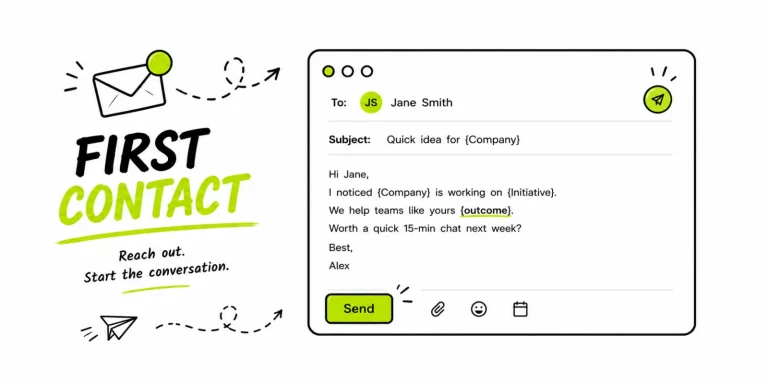
A 5-Email Lead Nurture Sequence You Can Steal (Copy Included)
Here’s a 5-email sequence tuned for the Interest-to-Consideration handoff – the slowest, most painful stretch of most B2B funnels. Replace the specifics with your own. The structure works for most B2B services and SaaS.
Email 1 – Day 0: The pattern recognition email
Subject: Why your RevOps probably isn’t broken
Most of the SaaS teams we work with come in thinking their RevOps is broken. After auditing 40+ stacks, we found something different: the stack works fine. The handoffs between marketing, sales, and CS are what’s broken. Here’s a 2-minute breakdown of what we see most: [link to blog post].
Email 2 – Day 4: The data piece
Subject: Our 2026 SaaS RevOps benchmarks
We surveyed 312 SaaS companies (50–500 employees) on lead handoff times, MQL-to-SQL conversion, and SDR-to-AE ratios. The full report’s here – no form, just a PDF: [link].
Email 3 – Day 8: The case study
Subject: How we cut Acme’s MQL-to-SQL time from 14 days to 3
Quick case study. Acme (Series B SaaS, 180 employees) had MQLs sitting in marketing for 14 days before sales touched them. We redesigned the handoff and the lead scoring model. New time: 3 days. Conversion rate up 37%. Read the 4-minute version: [link].
Email 4 – Day 12: The honest assessment
Subject: When you don’t need us
Half the companies we talk to don’t actually need outside help. If you have a tight team, clean CRM data, and someone who owns RevOps full-time, you can do this in-house. Here’s our 6-question self-assessment to find out which camp you’re in: [link to self-assessment].
Email 5 – Day 16: The light ask
Subject: 30 minutes, no pitch
If you’ve made it this far, you probably have a question or two. Want to grab 30 minutes? No pitch, no slide deck. Just diagnostic. Calendar’s here: [link].
A few things to notice. The sequence opens with a counter-intuitive claim (your RevOps probably isn’t broken), which earns attention from a skeptical reader. It mixes content types (blog, report, case study, self-assessment, call invite). Email 4 disqualifies people who shouldn’t buy – that builds trust and saves your sales team from bad-fit calls. Email 5’s “no pitch” subject line outperforms “let’s chat” or “book a demo” because it lowers the perceived cost of replying.
The reply rate on a sequence like this for a focused B2B audience usually lands between 4% and 12%. If you’re seeing under 2%, the problem is almost always the list, not the copy.
Lead Scoring + Lead Nurturing Together: The Closed-Loop Workflow
Here’s the part no other guide explains, which is also the part that makes the whole system work.
Lead scoring and lead nurturing aren’t two separate programs. They’re one closed loop:
- A new lead enters your CRM. Your scoring model runs and assigns a starting score.
- If the score is above your MQL threshold (say, 75), sales takes the lead.
- If the score is below threshold, the lead enters a nurture sequence.
- As the lead engages with the nurture (opens, clicks, replies), their score climbs.
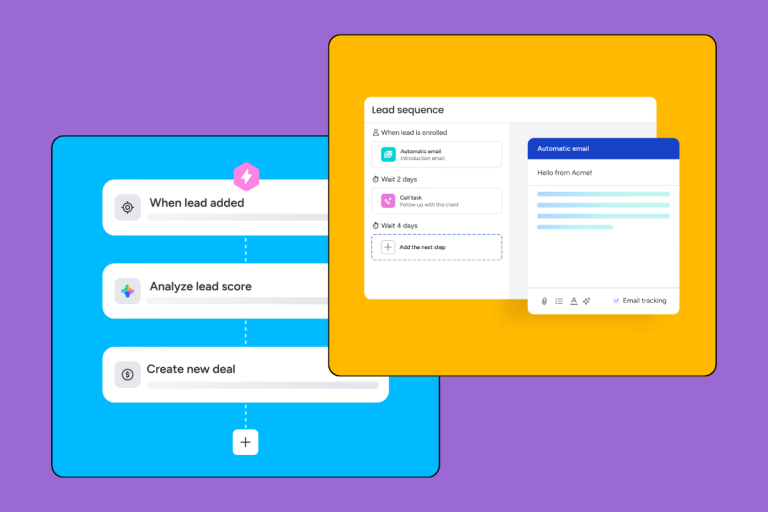
- When the score crosses the threshold, the lead automatically exits nurture and routes to sales.
- If the lead disengages instead, score decay drops them out of nurture into a low-touch monthly cadence – or out of the program entirely.
That’s the loop. Score triggers nurture. Nurture updates the score. Score promotes to sales or demotes to low-touch.
Score Triggers Nurture – and Nurture Updates the Score
The mechanical piece: your CRM has to talk to your email tool, or one tool has to do both. When a nurture email gets opened, the open adds points to the lead’s score. When the score crosses 75, the CRM moves the lead out of the nurture list and into the sales rep’s queue. When the score drops below 30 from decay, the lead drops to a quarterly newsletter.
If your tools can’t do this automatically, you’re going to spend hours moving leads between lists by hand. That’s the moment SMBs usually look at a more capable CRM. Our CRM automation workflows guide goes deeper on the wiring.
The closed loop is also what protects you against the two failure modes we mentioned in the intro:
- “Nurturing without scoring” sends sales-ready leads to a 16-week drip while they buy from a competitor.
- “Scoring without nurturing” abandons every lead under the threshold to silence.
Run both, wired together, and you stop losing pipeline to either gap.
Which CRMs Actually Do This Well? (Tool Picks for SMBs)
Plenty of CRMs say they do lead scoring and nurturing. Fewer actually do both well. Here are the three we recommend most often for SMB teams.
HubSpot. The most complete scoring + nurturing toolkit in the SMB market. Native lead scoring (rules-based on the Starter plan, predictive on Enterprise), strong workflow automation, and email sequences that actually work without duct tape. The catch is the price ramp once you cross the contact tiers – nurturing at scale on HubSpot can sting. Read our HubSpot review for the honest breakdown.
ActiveCampaign. If your priority is nurturing more than scoring, ActiveCampaign is the strongest contender. Email automation is excellent, segmentation is deep, and lead scoring is built in. Pricing is friendlier than HubSpot for small teams. The CRM piece is leaner than HubSpot’s – fine for SMBs, light for sales-led companies. ActiveCampaign review.
Pipedrive. Pipedrive’s a sales-first CRM that added a nurturing layer via Pipedrive Campaigns. Lead scoring is rules-based and capable. The strength is sales pipeline management, not marketing automation – if your team is more sales than marketing, Pipedrive plus a dedicated email tool often beats a marketing-heavy stack. Pipedrive review.
A rough decision rule: marketing-heavy team → HubSpot or ActiveCampaign. Sales-heavy team → Pipedrive plus a focused email tool. Mixed and small (under 25 people) → ActiveCampaign is usually the best value. For the broader picture, see our roundup of the best CRM for small business.
Common Mistakes That Kill Lead Scoring and Nurturing Programs
A short list of the things we see SMB teams do wrong. Most of these break the system within six months.
- Scoring on assumptions instead of conversion data. If your point values were guessed in a meeting, they’re wrong. Pull historic deals and reverse-engineer the model.
- Building 30-criteria scoring models on day one. Start with five criteria. Add more once the simple version is shipping. Complex models are harder to debug and produce identical outputs to simple ones for the first year.
- Skipping negative scoring and decay. Models without them inflate. Within a year, half your “qualified” leads are dead.
- Treating MQLs as sales-ready when sales hasn’t agreed. The threshold has to be jointly owned. If sales rejects 80% of MQLs, the threshold is wrong, or marketing is buying bad lists.
- Nurturing without a goal. Every email needs a job – move the lead forward, qualify them out, or restore engagement. Sends without jobs become spam.
- One sequence for everyone. Segment by funnel stage at minimum. Better: by fit and engagement together.
- Forgetting to retire the program. Nurture sequences age. Refresh content every 6–9 months. Email 3 from 2024 is not as good as it was in 2024.
- Tracking opens as if they’re intent. Opens are noise. Replies, clicks on pricing-related links, and meeting bookings are signal. Don’t weight opens above 2 points each.
- Ignoring customer acquisition cost on nurtured leads. A lead that takes 11 months to close costs more than one that closes in 30 days. Watch the math.
The fix for almost every one of these is the same: derive everything – point values, thresholds, sequence content – from actual data, then revisit quarterly.
Frequently Asked Questions
Is lead scoring worth it for a small team?
Yes, even for 5–10 person teams. Below ~50 leads per month, a simple spreadsheet model is fine. Above that, you need it baked into your CRM. The payoff is sales time saved on bad leads, which compounds fast.
How long should a lead nurture sequence be?
Long enough to cover the buying cycle of your typical lead. For a 6-week sales cycle, a 4–6 email sequence over 3–4 weeks usually fits. For a 9-month enterprise cycle, expect 12–20 touches over 4–6 months. Match the sequence to the cycle, not to an arbitrary “best practice” number.
Should I use AI lead scoring?
Only if you have the data volume to support it (hundreds of closed deals, thousands of leads monthly) and someone to maintain the model. For most SMBs, rules-based scoring outperforms predictive because the team understands what’s in the model and can fix it when it’s wrong.
What’s the difference between lead nurturing and drip campaigns?
Lead nurturing is the strategy. Drip campaigns are one tactic inside it. A nurture program might use drip emails, retargeting ads, webinars, and direct sales touches together. A drip campaign is just the scheduled email piece.
Can I do lead scoring and nurturing without a CRM?
You can prototype it in a spreadsheet plus a basic email tool, but you’ll hit the wall fast. Anything beyond a few dozen active leads needs proper CRM automation – it’s the difference between a system you maintain and a system that maintains itself.
How often should I update my lead scoring model?
Quarterly review at minimum. Major revision once a year, or any time your product, ICP, or sales process changes meaningfully. Stale scoring models drag down conversion quietly – the symptom is MQLs trending down without an obvious cause.
Do nurtured leads really convert better?
Yes, and the lift is significant. Demand Gen Report’s research found a 20% increase in sales opportunities from nurtured leads vs untreated ones. Forrester’s research has put the cost-per-lead reduction at around 33% for companies running mature nurture programs. Numbers vary by industry, but the direction is consistent.
If you’ve made it this far, the next step is wiring this into a real CRM. Start with our best CRM for small business roundup – every tool listed there supports the closed-loop scoring + nurturing workflow described above.