
Most leads don’t buy the first time they hear about you. In fact, most leads don’t buy at all — they quietly disappear somewhere between “this looks interesting” and “let me check the pricing.”
A sales funnel is how you stop that from being random.
It maps the exact path a prospect takes from first contact to closed deal, so you can identify where people drop off, what nudges them forward, and which messages convert at each stage. If you’ve ever wondered why some leads go cold despite real interest, the answer is almost always a gap in the funnel.
What Is a Sales Funnel?
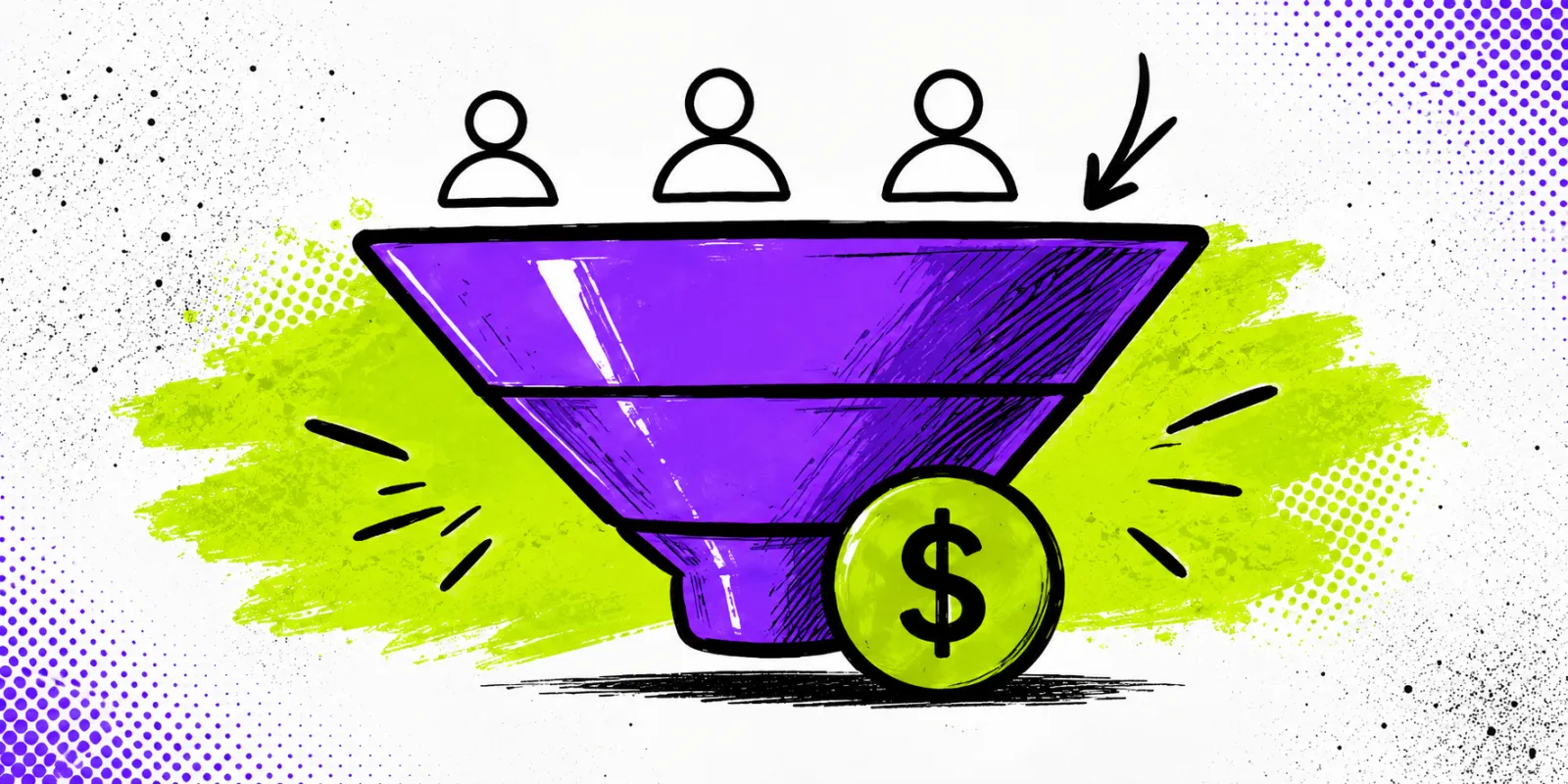
A sales funnel (sometimes called a purchase funnel or pipeline) is a visual model of the buyer’s journey — wide at the top where awareness happens, narrow at the bottom where purchases close.
The “funnel” shape isn’t just a metaphor. At every stage, some portion of prospects fall away. You start with a large pool of potential buyers; you end with a smaller group who actually convert. The funnel makes that attrition visible — and manageable.
Understanding your funnel lets you answer questions like:
- Where exactly are prospects going quiet?
- Which marketing channels bring in leads that actually close?
- What content or outreach moves people from curious to committed?
Without a funnel model, you’re guessing. With one, you’re diagnosing.
Sales Funnel vs. Marketing Funnel: What’s the Difference?
These terms get used interchangeably — they shouldn’t.
The marketing funnel covers everything from brand awareness to lead capture. Its job is to fill the top with as many relevant prospects as possible: ads, content, SEO, social, referrals. Success is measured in reach and lead volume.
The sales funnel picks up where marketing hands off. It’s about converting those leads into paying customers through qualification, follow-up, demos, proposals, and closing. Success is measured in conversion rate and revenue.
In practice, the two should connect cleanly. Marketing fills the top; sales works the bottom. When they’re misaligned — when marketing sends unqualified leads or sales can’t follow up quickly — the funnel leaks.
The Classic Sales Funnel Stages
Most funnels follow a version of four core stages:
1. Awareness (Top of Funnel – ToFu)
The prospect discovers you exist. This happens through search, social, word of mouth, ads, or a referral. They’re not ready to buy — they’re just starting to understand they have a problem you might solve.
Your job at this stage: get found, be credible, offer something worth their attention.
2. Interest (Middle of Funnel – MoFu)
The prospect is actively researching. They’re reading your content, comparing options, maybe signing up for a newsletter or downloading a guide. This is where trust is built — or lost.
Your job at this stage: educate without the hard sell. Blog posts, case studies, comparison guides, and email sequences work well here. [INTERNAL LINK: what is a CRM]
3. Decision (Bottom of Funnel – BoFu)
The prospect has narrowed their options and is ready to evaluate seriously. They want pricing, demos, trials, and social proof. They’re comparing you against one or two alternatives.
Your job at this stage: remove friction and reduce risk. Free trials, clear pricing pages, customer reviews, and fast response times close more deals than any extra feature.
4. Action
They buy. Or they don’t — and understanding why people exit here is one of the highest-leverage improvements you can make to a sales process.
B2B vs. B2C Sales Funnels
The stages are the same. The timeline isn’t.
In B2C, purchase decisions are often fast and emotionally driven. Someone sees a product, wants it, buys it — sometimes in minutes. The funnel is short. Your main levers are messaging, trust signals, and frictionless checkout.
In B2B, the process is slower and involves more people. Buying a CRM, for example, typically involves a sales manager, a finance sign-off, and sometimes IT. The funnel has more touchpoints, more nurturing, and more objection-handling. A deal that looks warm in week one might not close for 90 days.
There’s a useful middle category worth naming: high-consideration B2C. Buying a house or a car looks more like B2B than B2C — multiple stakeholders, a long evaluation phase, and a decision that takes weeks or months. If you sell in that space, a B2B-style funnel will serve you better.
The AIDA Model: The Classic Funnel Framework
AIDA is the most widely used funnel framework, originally developed for advertising but now applied across website design, email campaigns, and sales sequences:
- Attention – Interrupt the scroll, stop the skip, earn the click
- Interest – Explain why this matters to them specifically
- Desire – Make them want the outcome, not just the product
- Action – Tell them exactly what to do next
When you’re building a landing page or a sales email, running it through AIDA is a quick sanity check. If any stage is missing, conversion will suffer.
ToFu, MoFu, BoFu: Matching Content to Funnel Stage
One of the most practical applications of funnel thinking is content planning. Different content works at different stages — and publishing the wrong type at the wrong time is a waste.
ToFu content (Top of Funnel) builds awareness. Think: blog posts answering common questions, SEO guides, social content, YouTube videos. These reach people who don’t know you yet.
MoFu content (Middle of Funnel) builds consideration. Think: comparison guides, case studies, email sequences, webinars. These speak to people who know their problem and are evaluating solutions. [INTERNAL LINK: best CRM for small business]
BoFu content (Bottom of Funnel) drives decisions. Think: pricing pages, free trial CTAs, demo booking links, customer testimonials. These convert people who are already sold on the category and just need to pick a vendor.
Most companies over-invest in ToFu and under-invest in MoFu. The result: lots of traffic, weak conversion.
Where CRM Fits Into Your Sales Funnel
A sales funnel is a model. A CRM is the system that makes it operational.
Without a CRM, your funnel exists on paper — or in someone’s head. With a CRM, every prospect has a stage, every deal has a next action, and nothing falls through the cracks because someone forgot to follow up.
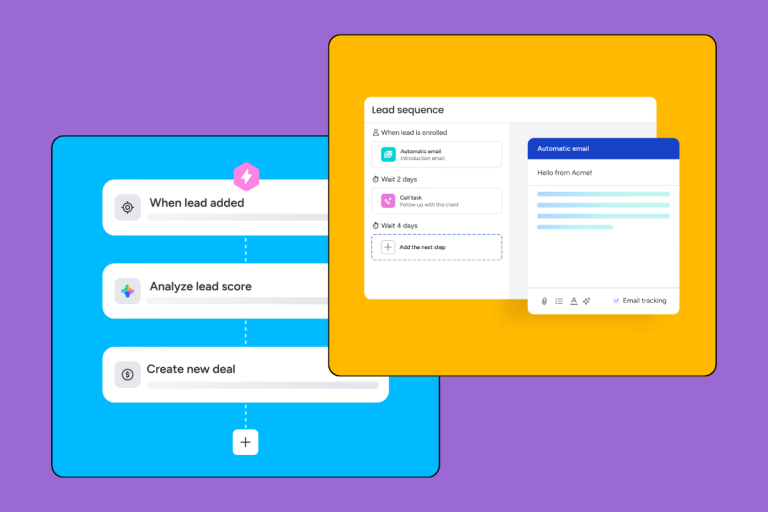
At the top of the funnel, a CRM captures leads from your website, ads, and outreach and routes them into the right pipeline. In the middle, it logs interactions — calls, emails, demos — so the whole team has context. At the bottom, it tracks proposals, flags stalled deals, and shows you which reps close and which ones stall out.
If you’re building or fixing a sales funnel, a CRM isn’t optional — it’s the infrastructure. [INTERNAL LINK: best CRM for sales teams]
How to Build Your Own Sales Funnel
Step 1: Map your current reality. Before designing anything, write down how leads currently reach you and what happens to them. Most teams find leaks immediately just by doing this.
Step 2: Define your stages. You don’t need seven stages. Three to five, clearly named and understood by everyone on the team, beats an elaborate system no one uses.
Step 3: Match your marketing to each stage. Which channels bring leads into the top? Which content moves them through the middle? What closes them at the bottom? If you can’t answer these, you’re missing the data — which means you need analytics at the top and a CRM in the middle and bottom.
Step 4: Set up tracking. You need to know conversion rates at each stage transition. If 100 people enter your funnel and 3 buy, where do the other 97 leave? Each exit point is an optimization opportunity.
Step 5: Iterate. Funnels aren’t set-and-forget. Test different lead magnets, follow-up sequences, and CTAs. Small improvements at each stage compound quickly.
Real-World Funnel Examples
E-commerce: A prospect finds your product via Google (Awareness), reads reviews and compares options (Interest/Decision), then hits a discount pop-up before leaving (Action). Optimizing that pop-up alone can add meaningful revenue.
B2B SaaS: A founder reads your blog post on CRM selection (Awareness), downloads a comparison guide (Interest), signs up for a free trial (Decision), gets a follow-up call from sales (Action). Each step is a distinct funnel stage with its own content and tooling.
Marketing agency: A potential client sees a LinkedIn post (Awareness), visits your case studies page (Interest), books a discovery call (Decision), receives a proposal (Action). CRM tracks every step so no deal goes cold by accident.
FAQ
What’s the difference between a sales funnel and a sales pipeline?
They’re related but not the same. A sales pipeline tracks deals your sales team is actively working — it’s an internal tool. A sales funnel is broader and includes the full buyer journey, including the marketing phases before a lead becomes a deal.
How many stages should a sales funnel have?
As few as possible while still being useful. Three to five stages works for most SMBs. More stages add complexity without improving conversion unless your sales cycle genuinely requires that granularity.
Do I need a CRM to run a sales funnel?
Technically, no. Practically, yes — once you have more than a handful of leads, tracking them in a spreadsheet breaks down fast. A CRM gives your funnel a backbone. [INTERNAL LINK: best free CRM]
Why do most sales funnels leak?
Usually one of three reasons: the wrong leads enter at the top (targeting problem), the middle lacks enough nurturing to build trust (content problem), or the bottom has too much friction — bad pricing pages, slow follow-up, unclear CTAs (conversion problem).
Is the sales funnel model outdated?
Some marketers argue for replacing it with a “flywheel” model that emphasizes retention and referral. Both are useful. The funnel is still the right mental model for understanding new customer acquisition; the flywheel adds the post-purchase loop that the funnel ignores.
The Bottom Line
A sales funnel won’t fix a bad product or a weak value proposition. What it will do is show you exactly where your sales process works and where it breaks — so you can stop guessing and start fixing.
Map your stages, connect your marketing to each one, build in tracking, and use a CRM to keep the whole thing running. That’s the system. Everything else is tuning.