
Below we present framework for the sales cycle, explain where deals actually stall (not where CRM vendors wish they’d stall), and point you toward the right tools at each stage.
If you already use a CRM, this should make your pipeline stages click into place. If you’re running deals on a spreadsheet, it’ll show you why that’s quietly costing you revenue.
What Is a Sales Cycle?
A sales cycle is the repeatable sequence of steps a sales rep follows to convert a prospect into a paying customer. It starts with identifying the right people to sell to and ends with a signed contract – or, done well, a long-term relationship that keeps paying.
Every business has a sales cycle, whether they’ve mapped it or not. The question isn’t whether you have one. It’s whether yours is running on instinct or intention.
Sales cycle vs. sales process: one-sentence difference
The sales cycle is the journey from prospect to close. The sales process is your company’s defined playbook for navigating that journey – the specific actions, qualification criteria, and handoff rules at each stage. Think of the cycle as the road and the process as the driving instructions.
Sales cycle vs. sales funnel: not the same thing
The sales funnel describes where buyers are mentally – awareness, consideration, decision. The sales cycle describes what your reps are doing at each point. Same underlying journey, different lens. You’ll see plenty of guides use these terms interchangeably. They’re wrong.
This distinction matters because funnels live in marketing; cycles live in sales. If you’re trying to fix slow deals, you’re working on the cycle, not the funnel.
Why Does Your Sales Cycle Length Matter?
If you don’t know your average sales cycle length, you can’t predict revenue. Full stop.
Here’s a practical example. If your average cycle is 60 days and you want $100K in new revenue next month, you need the pipeline you’re building right now to already be 30 days in. You can’t back-fill that. Revenue forecasting only works when you know how long it takes a deal to move through your stages.
There’s also the cash flow angle. Long cycles eat cash. Every deal sitting unattended in “Proposal Sent” for three weeks is a real cost – in rep time, in opportunity cost, and occasionally in a competitor quietly closing the account you forgot to follow up on. We’ve seen this kill otherwise solid SMB sales operations.
Shorter cycles generally mean lower deal risk, faster revenue recognition, and less dependence on any single opportunity. They’re not always achievable (enterprise deals are what they are), but they’re worth optimizing toward.
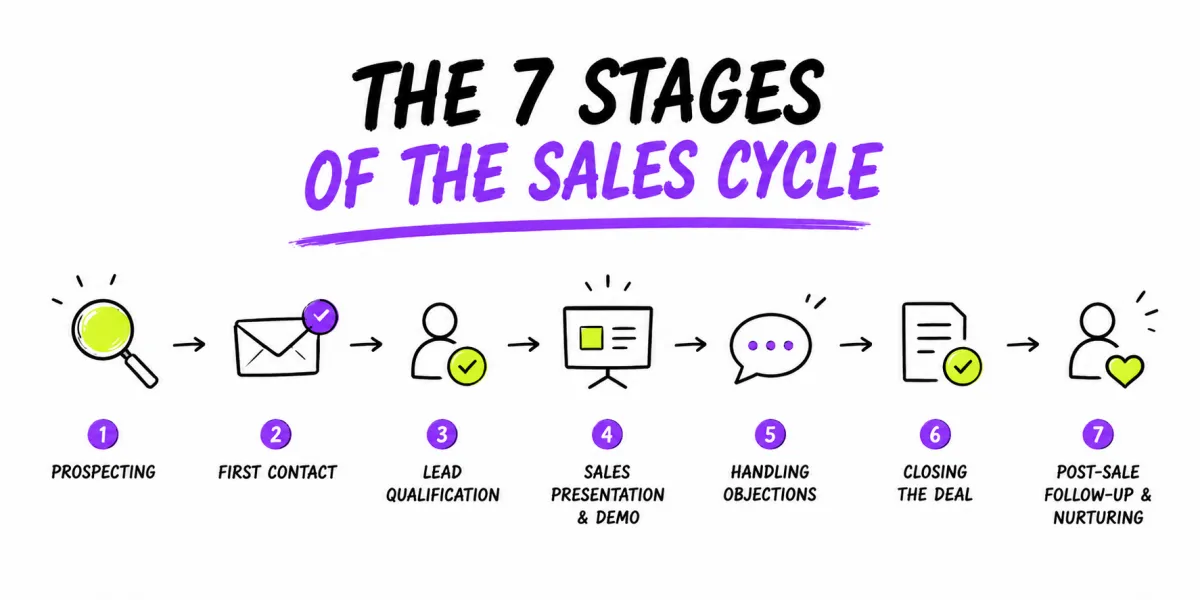
The 7 Stages of the Sales Cycle
You’ll see articles claiming 5, 6, 7, 8, even 9 stages. Here’s the honest answer: they’re describing the same process. Shorter models combine steps that longer models split apart. We use 7 because it maps cleanly to how Small Medium Business sales actually work – granular enough to be useful, simple enough that a rep can hold it in their head on a call.
- Prospecting
- First Contact
- Lead Qualification
- Sales Presentation and Demo
- Handling Objections
- Closing the Deal
- Post-Sale Follow-Up and Nurturing
1. Prospecting
Prospecting is finding people who might actually buy from you. Not everyone. The right ones.
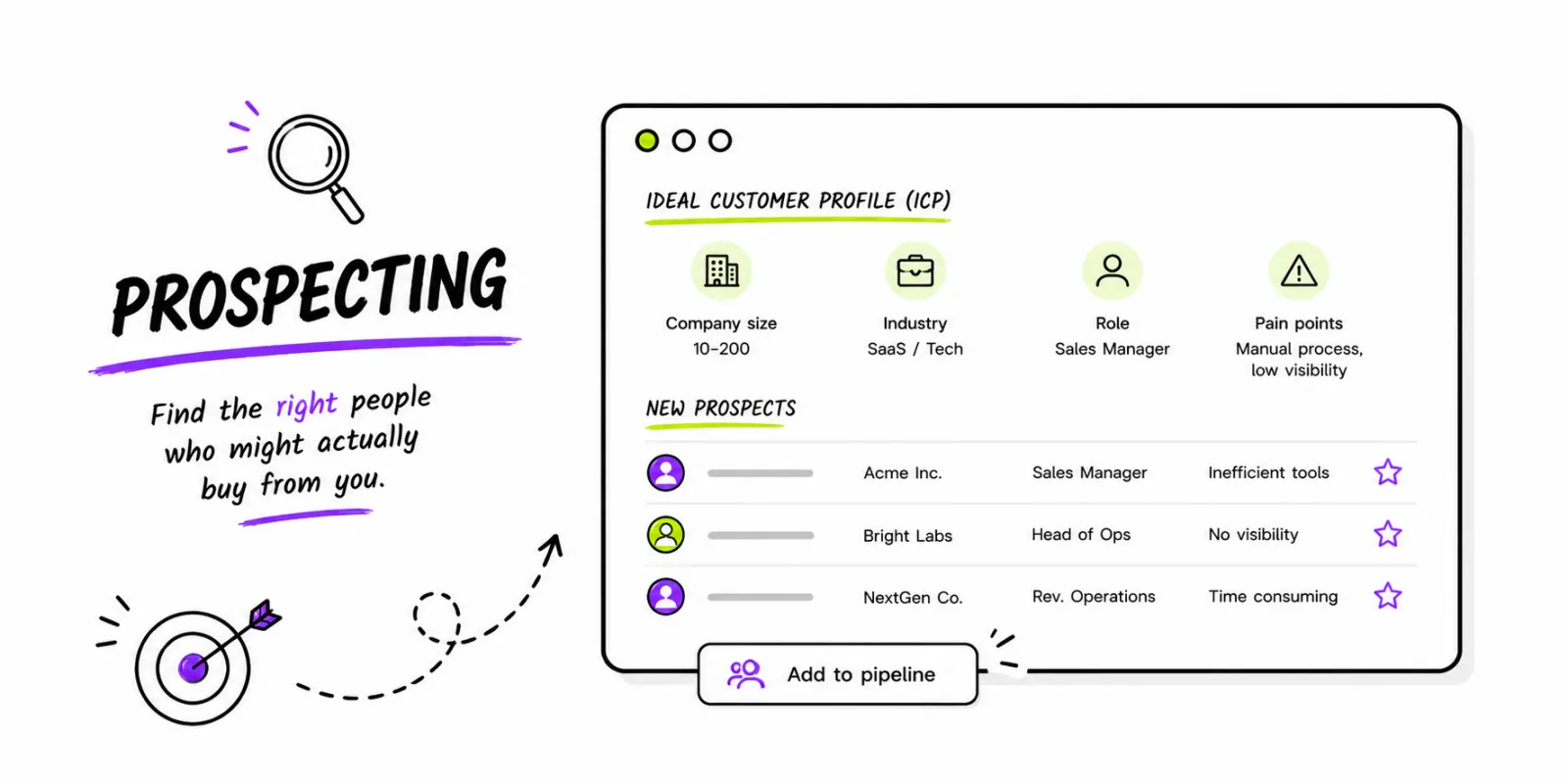
This means defining your ICP (ideal customer profile) before you start. What company size, industry, and role? What pain signals suggest a prospect is in-market? Reps who skip this step burn serious time on accounts that were never going to close.
Prospecting methods vary by market. Outbound (cold email, cold calls, LinkedIn outreach) works well when you have a tight ICP and a scalable message. Inbound (content, SEO, referrals) is slower to build but brings you warmer prospects who already have some context on your product. Most SMB sales teams use both.
One thing that kills prospecting at this stage: not tracking it. If you can’t see how many new prospects enter your pipeline each week and where they came from, you’re managing a mystery, not a sales operation.
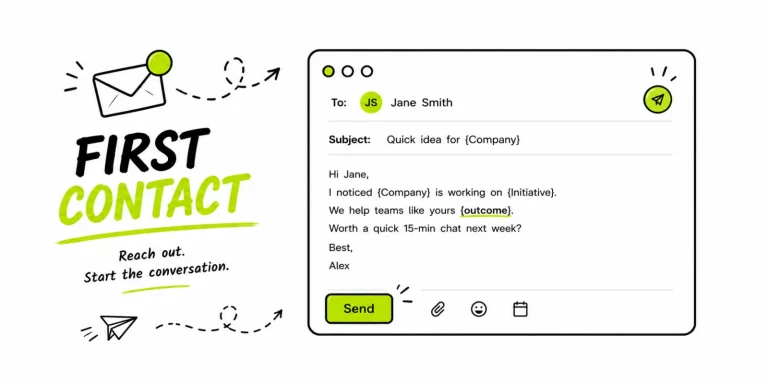
2. First Contact
First contact is exactly what it sounds like – the initial outreach. Cold email, a LinkedIn connection request with a note, or a cold call.
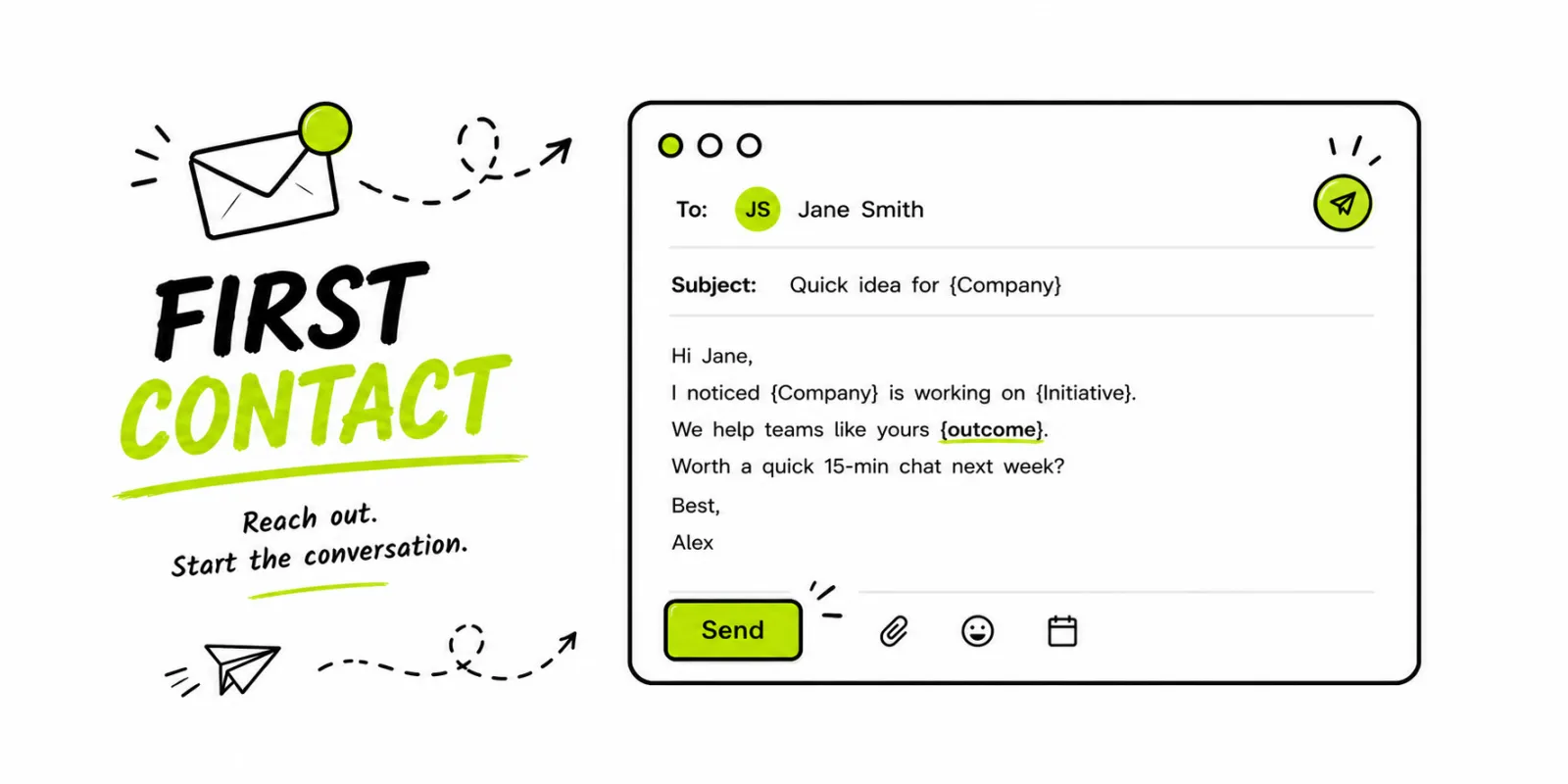
The goal at this stage is not to sell. It’s to earn the right to a conversation. This distinction matters more than most reps admit. When first contact is treated as a pitch, response rates collapse. When it’s treated as an invitation to explore whether there’s a fit, they go up.
What first contact looks like in practice:
- Cold email: short, specific, one clear ask (usually a 15-minute call)
- Cold call: disqualify fast, move to curiosity questions, don’t pitch the product
- Social outreach: lead with a genuine observation or shared context before any ask
The best first contacts reference something specific to the prospect – a recent hire, a piece of content they published, a problem their industry is obviously dealing with. Generic is forgettable. Specific gets replies.
3. Lead Qualification
Qualification is where you decide if a prospect is worth your time. This is the stage most reps rush through – and the one that explains why pipelines are full of deals that never close.
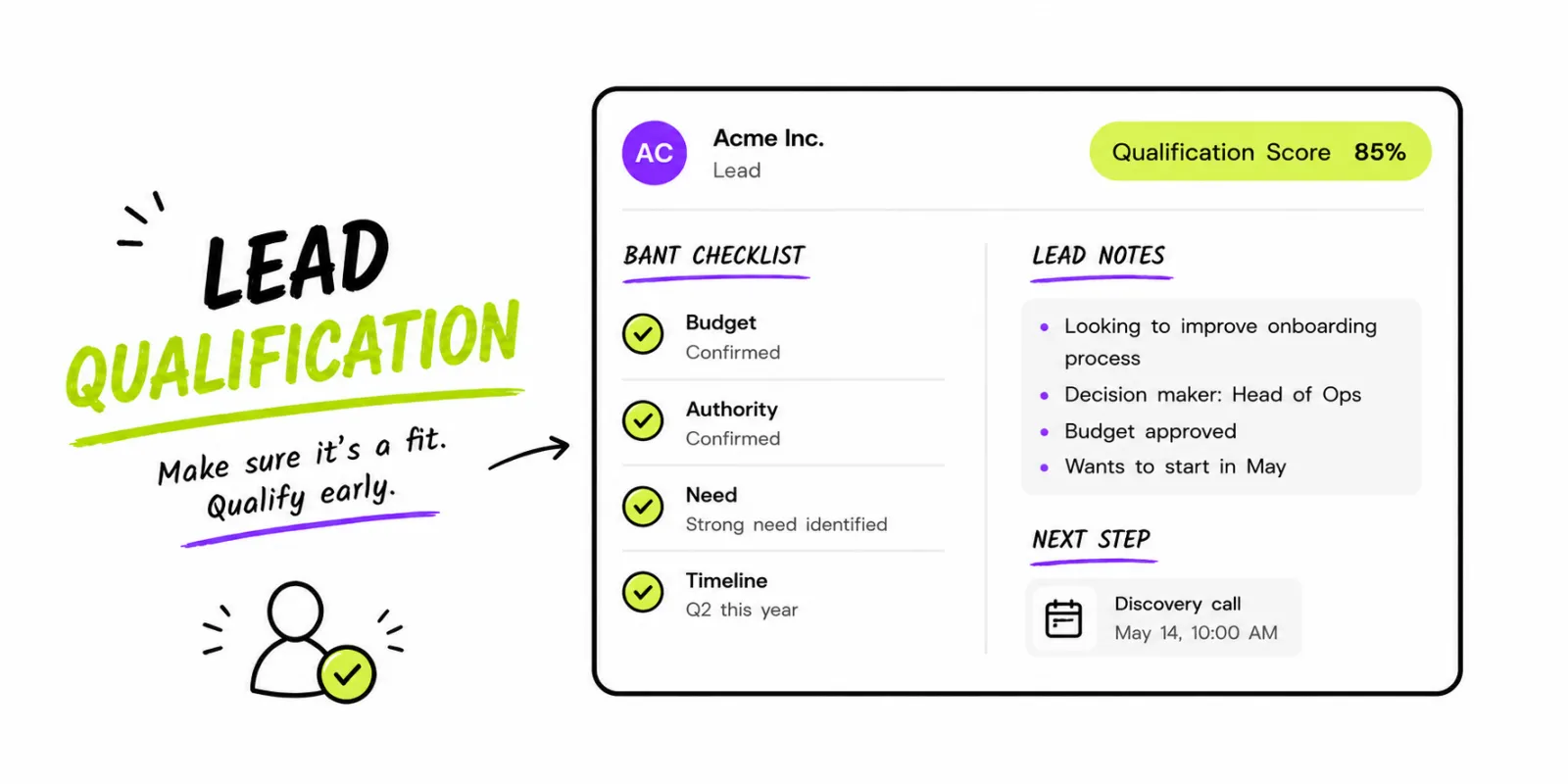
The most common framework is BANT:
- Budget – Can they afford what you sell?
- Authority – Are you talking to someone who can actually say yes?
- Need – Do they have a problem your product solves?
- Timeline – Are they looking to move, or just browsing?
You don’t need all four to be green before advancing a deal. But you do need to know which ones are uncertain, because that shapes how you sell from here. A prospect with clear need and budget but no authority is a different conversation than one with authority but fuzzy need.
One qualification signal that gets underweighted: urgency. A prospect who’s been “thinking about it” for 90 days without moving is not qualified. Urgency isn’t always present at the start – it can be created through good discovery – but if there’s no path to it, there’s probably no deal.
4. Sales Presentation and Demo
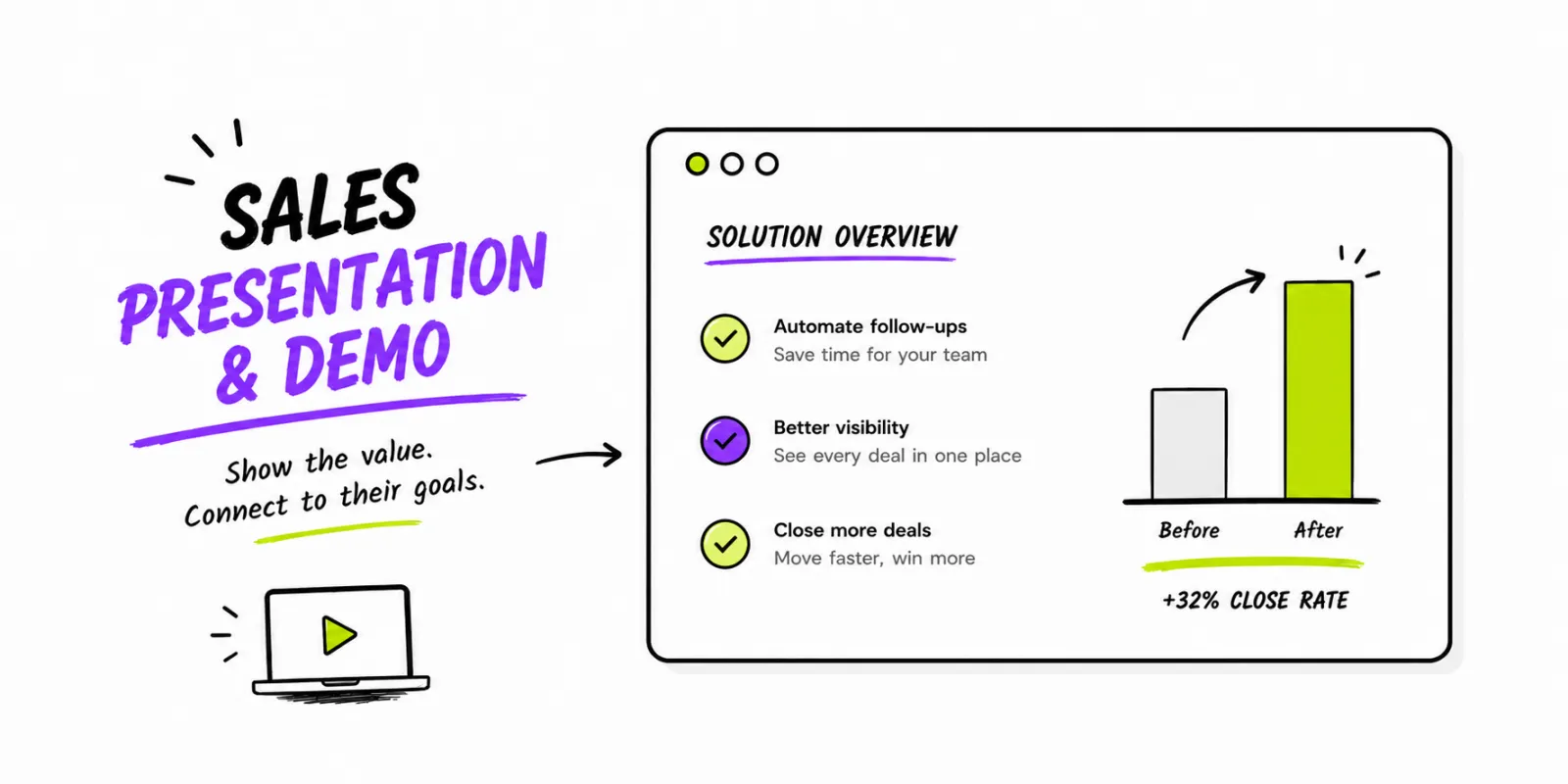
This is where you show what your product actually does, contextualized to the prospect’s specific situation.
Bad demos show every feature. Good demos show the features that solve the problems you surfaced in qualification. If your discovery was thorough, you already know what three things the prospect most needs to see. Build the demo around those.
A few things worth internalizing about this stage:
The demo is not the close. It’s the evidence. The close comes later. Treating the demo as the close moment leads to pushing too hard, too early, which breaks rapport.
Letting the prospect talk during the demo is not a sign the demo is going off-script – it’s a sign they’re engaged. Follow the energy. The questions they ask reveal their buying criteria.
And always end with next steps. Not “let me know what you think” – that’s a deal-killer phrase. Agree on a specific follow-up action before the demo ends.
5. Handling Objections
Objections are not rejections. They’re questions in disguise.
- “It’s too expensive” – usually means “I’m not convinced the value justifies the price yet.”
- “We’re not ready” – often means “I’m not sure I can get internal buy-in.“
- “Let me think about it” – almost always means “I have a concern I haven’t told you, or not really interested.“
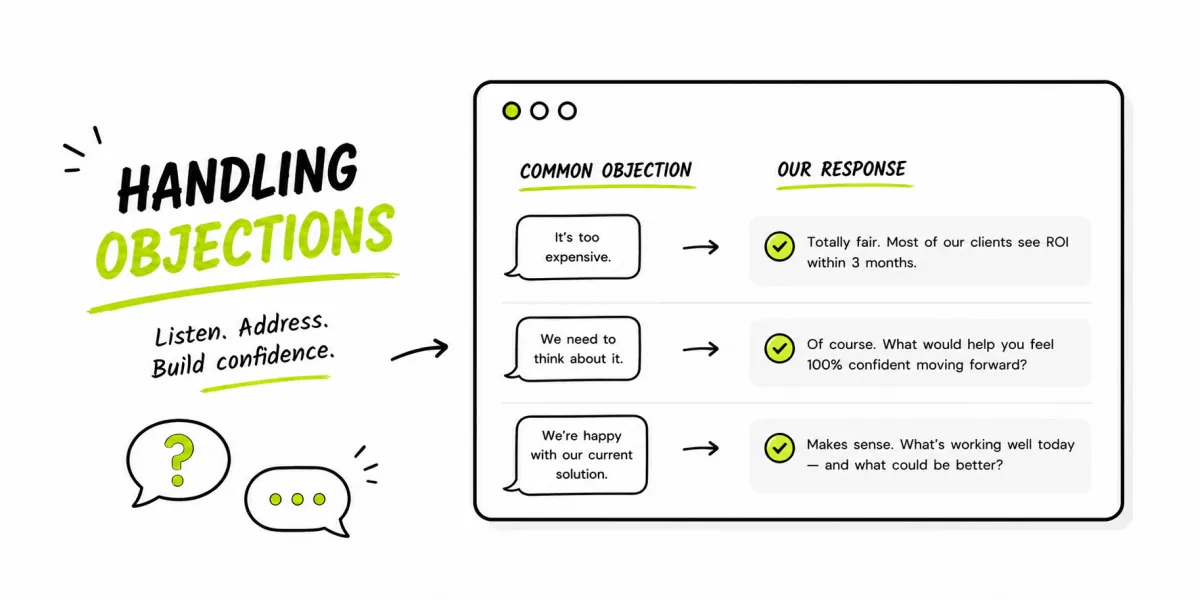
The reps who close the most don’t have fewer objections. They handle them better.
Your five most common objections should have scripted responses – not because scripts sound natural (they don’t, if you use them poorly), but because you should have thought through the best answer before you need it under pressure. The time to figure out how to respond to a pricing objection is not while you’re on a call with a prospect.
Price objections specifically: probe before you concede. Cutting price to close a deal is almost always the wrong first move. Understanding the real concern – is it budget availability, competitive pressure, or perceived value mismatch? – usually opens a better path than a discount.
6. Closing the Deal
The close is not a single moment. Not in b2b… It’s the natural culmination of everything that came before.
If you’ve qualified well, run a good demo, and handled objections cleanly, the close should feel like a formality. If it doesn’t – if there’s still real uncertainty about whether the deal will happen – something earlier in the cycle was incomplete.
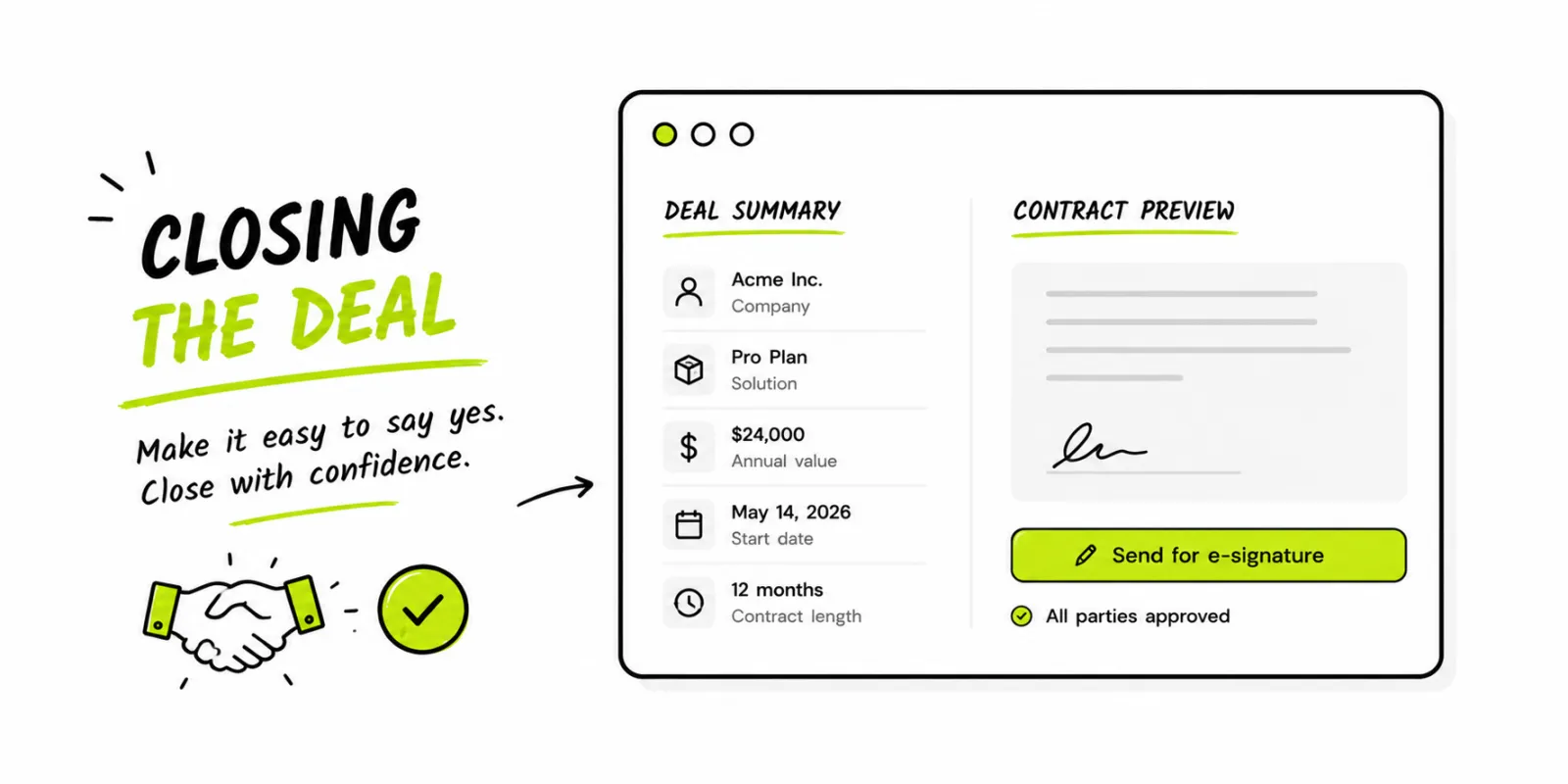
That said, asking for the business explicitly matters. Reps who assume the deal is done because the prospect “seemed really positive” lose deals they should have won. You need to say the words: here’s the proposal, here are the terms, when do you want to get started?
A few close-stage landmines to avoid:
- Sending a proposal and then going quiet. Follow up within 48 hours, always.
- Multi-stakeholder deals where you’ve been talking to the wrong person. This should have been caught in qualification, but if it surfaces at close, loop in the decision-maker before the proposal goes out.
- Discounting reflexively. If a prospect pushes back on price at close after accepting your value proposition throughout the cycle, the objection is rarely actually about the price.
7. Post-Sale Follow-Up and Nurturing
Most sales models end at close. That’s a mistake.
The period right after signing is when churn is born or killed. A customer who signs and then doesn’t hear from you for two weeks has a much higher chance of becoming a difficult renewal, an early churner, or a negative review.
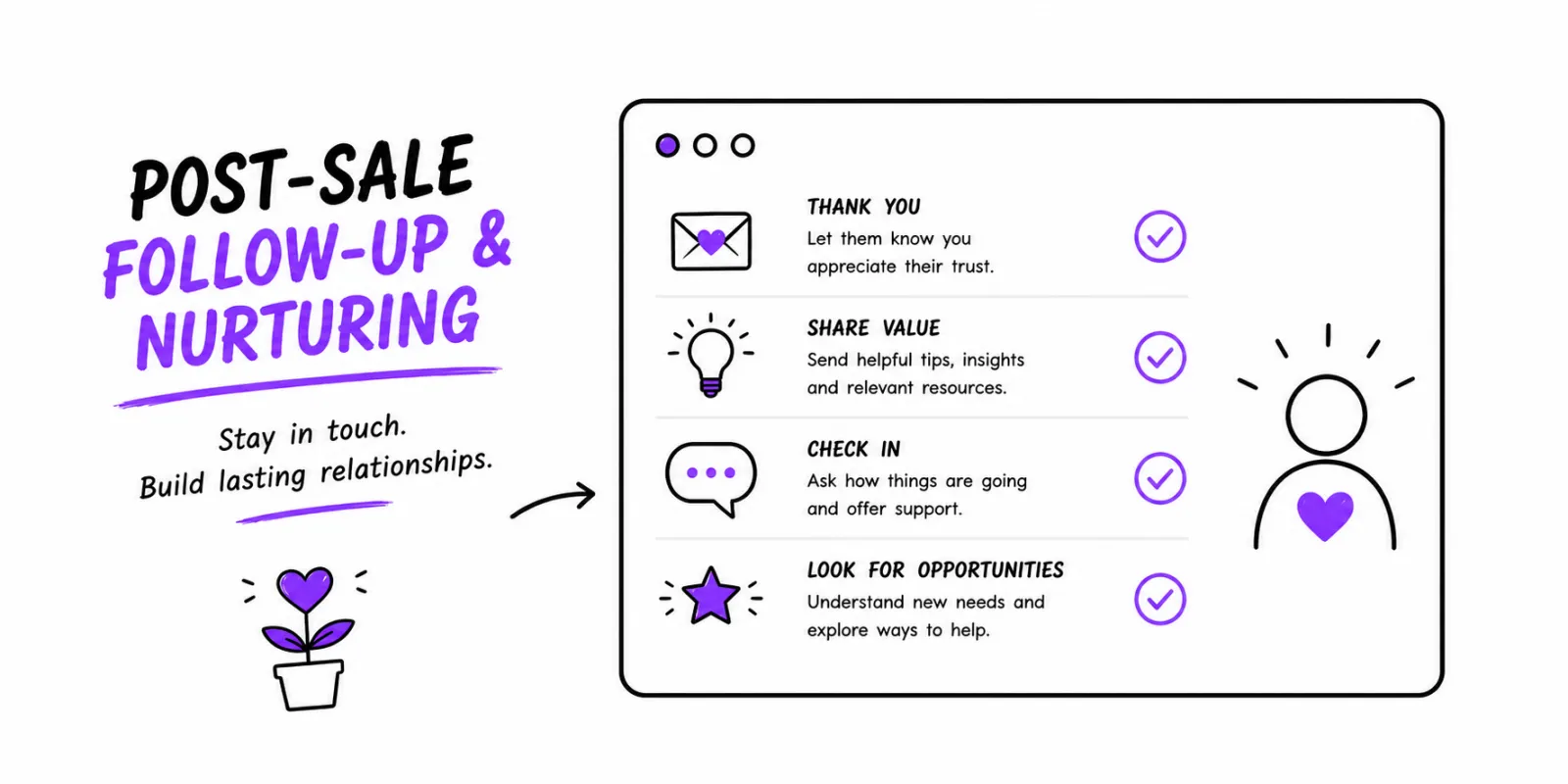
What good post-sale follow-up looks like:
- A structured onboarding check-in at days 7, 30, and 60
- A proactive account review at 90 days, before the customer has a reason to raise concerns
- Building the relationship with the end users, not just the buyer – the person who signed is not always the person using the product
The nurturing piece is where affiliate-relevant CRM guidance matters most. Tools like Attio and Pipedrive both have automation sequences that can handle post-sale check-ins at scale without requiring a rep to remember every follow-up date. If you’re managing more than 20 active accounts and doing follow-ups manually, you’re losing some of them.
This stage also plants the seeds for upsells and referrals – two revenue streams that cost almost nothing to develop if you’ve done the relationship work.
How Long Should a Sales Cycle Be?
Short answer: as short as it can be without rushing buyers to a decision they’ll regret.
The more useful answer depends on your deal type. A $500/month SaaS tool sold to a solo founder can close in a week. A $50,000 services contract sold to a committee at a 200-person company might reasonably take four months. Both could be “healthy” cycles. The benchmark is your own historical data, not an industry average.
B2B sales cycles typically run 3 to 6 months for mid-market deals. Transactional SMB sales close in days to weeks. Enterprise deals routinely run 6 to 18 months. These aren’t targets – they’re ranges to sanity-check whether you’re in the ballpark.
Short sales cycles vs. long sales cycles
Short cycles (days to weeks): common in transactional sales, low deal value, single decision-maker. Velocity matters more than depth. The risk is under-qualification – closing fast on prospects who weren’t the right fit leads to churn.
Long cycles (months to a year+): common in enterprise or complex B2B sales. Multiple stakeholders, procurement processes, security reviews. Relationship depth matters more than velocity. The risk is deals going cold between touchpoints – which is almost entirely preventable with good CRM discipline.
The one pattern we consistently see in SMBs with stuck pipelines: deals are long not because they have to be, but because follow-ups are inconsistent. A 90-day deal becomes a 180-day deal because the rep sent a proposal and waited three weeks for a reply that never came. That’s not a long cycle; that’s a stalled one.
How to measure your average sales cycle length
Calculate it from your CRM data:
- Pull all deals closed in the last 6–12 months.
- For each deal, find the date the prospect was created and the date the deal was marked closed-won.
- Calculate the difference in days.
- Average those numbers across all closed-won deals.
That’s your baseline. Break it down further by deal source, industry, or deal size and you’ll see patterns – certain lead sources close faster, certain segments drag. Those patterns tell you where to focus optimization.
If you’re not tracking this in a CRM yet, you’re operating on intuition. It might be time to read our guide to 5 signs your company needs a CRM.
Where Deals Stall – and What to Do About It ❓
Every sales cycle has friction points. Here are the most common ones, and what actually causes them.
After the demo, before the proposal. The prospect seemed engaged during the demo but hasn’t responded to follow-ups. Usually this means: a) they’re not the decision-maker and need to discuss internally, b) a concern surfaced during or after the demo that they haven’t voiced, or c) something in their business shifted. Ask directly: “What would need to be true for you to move forward?” That question surfaces 80% of silent objections.
Proposal sent, no response. The single most common deal-killer in SMB sales. A proposal that sits unanswered for more than a week without a follow-up is a deal that’s probably dying. Follow up within 48 hours of sending the proposal with a specific question, not a generic “checking in.”
Stuck in qualification. Some deals stay in “discovery” because the rep hasn’t been willing to disqualify. If a prospect doesn’t have budget, authority, and at least a rough timeline after two substantive conversations, they’re probably not going to buy. Moving them to a nurture sequence frees up time for prospects who are actually in-market.
Multiple stakeholders appearing late. You thought you were selling to the founder. Two weeks before close, you find out there’s a procurement committee. This is almost always a qualification failure – the rep didn’t ask “who else will be involved in this decision?” early enough. Add that question to your discovery call checklist and you’ll catch this before it costs you.
How to Shorten Your Sales Cycle Without Rushing Buyers
The fastest path to a shorter cycle is better qualification (!), not faster closing. Deals that close quickly do so because the rep found the right prospect, surfaced the right problem, and stayed on top of follow-ups. Speed is an output of good process, not an input.
That said, here’s where most SMB teams have room to compress time without changing what they sell or who they sell to:
Qualify harder upfront. Ten minutes on a discovery call that reveal a prospect has no budget or no real urgency is ten minutes that saves you four weeks of chasing. Ruthless qualification at the start is the highest-leverage shortening move.
Never leave a call without a committed next step. “I’ll follow up” is not a next step. “I’ll send you the proposal on Thursday and we’ll review it together on the 15th” is a next step. Mutual commitments compress the time between stages.
Reduce proposal friction. If your proposal takes a prospect a 45-minute meeting to understand, it’s too complicated. A clear one-pager with pricing, scope, and terms usually moves faster than a 12-slide deck.
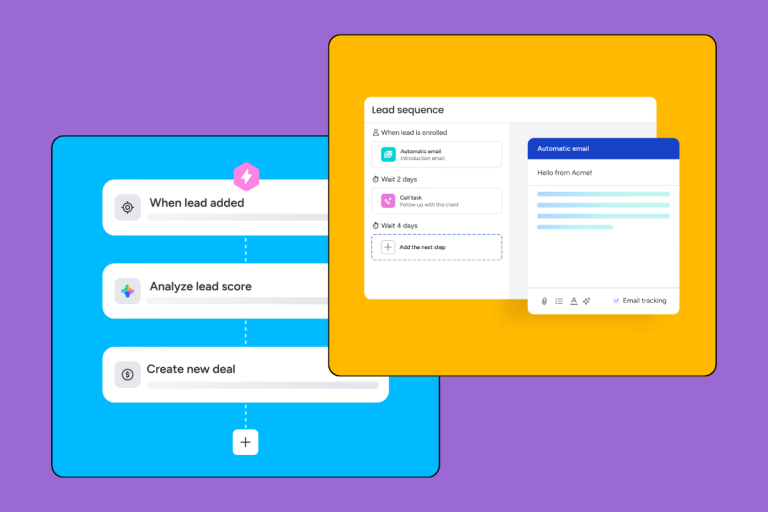
Use automation for follow-ups. Reps forget to follow up. It’s not laziness – it’s cognitive load. A CRM with automated sequences eliminates the dependency on memory and keeps deals moving between stages without requiring daily manual effort.
How a CRM tracks and accelerates each stage
A well-configured CRM maps directly to your sales cycle stages. Each stage in your pipeline corresponds to one of the steps above. When a rep moves a deal from “Demo Scheduled” to “Proposal Sent,” the CRM can automatically trigger a follow-up reminder for 48 hours later, send the prospect a confirmation email, or notify the manager that the deal has advanced.
Here’s where specific tools perform well at specific stages, based on our testing:
Prospecting: Pipedrive’s and Attio’s prospecting tools both do this well. For outbound-heavy teams, a dedicated sequencing tool (Reply.io is worth reviewing) integrated with your CRM is often stronger than native CRM prospecting features.
Qualification: Any CRM supports this with custom fields, but Pipedrive’s pipeline view makes it easy to see at a glance which BANT criteria are confirmed. HubSpot’s deal properties do the same – it’s just more setup.
Post-sale: HubSpot’s automated sequences are genuinely good for post-sale nurturing at scale. Set up a 30/60/90-day check-in sequence when a deal closes and it runs without rep involvement. Pipedrive can do this too with its automation features, though it’s slightly less polished.
The most important thing isn’t which CRM you use. It’s that you configure it to actually reflect your sales stages. A CRM where all deals sit in “In Progress” because no one built out the pipeline stages isn’t helping anyone.
If you’re still comparing options, our breakdown of the best sales CRM covers the tools we’d recommend by team size and use case.
FAQ: Sales Cycle Stages
What are the 7 stages of the sales cycle?
The 7 stages are: Prospecting, First Contact, Lead Qualification, Sales Presentation and Demo, Handling Objections, Closing the Deal, and Post-Sale Follow-Up and Nurturing.
What is the difference between a 5, 6, 7, or 8 stage model?
They’re all describing the same process at different levels of granularity. A 5-stage model usually combines prospecting and first contact into one step, and handling objections into the close. A 7-stage model splits them out. Neither is objectively correct – use whatever level of detail your team can actually track in their CRM without it becoming bureaucratic.
How long is a typical B2B sales cycle?
For mid-market B2B deals, 3 to 6 months is typical. Simple transactional SMB sales can close in days. Enterprise deals regularly run 6 to 18 months. The more meaningful benchmark is your own historical average, which you can calculate from your CRM’s closed-won data.
What factors make a sales cycle longer or shorter?
Lengthening factors: high deal value, multiple decision-makers, procurement or legal review, complex implementation, no urgency. Shortening factors: strong inbound intent, single decision-maker, low contract value, a well-run discovery call that surfaces urgency, and consistent follow-up discipline via a CRM.
What are the 5 C’s of sales?
Contact, Connect, Convince, Commit, and Close. It’s a simplified alternative framework for tracking deal progression. Works well for very simple transactional sales. For anything with multiple stages or stakeholders, a 7-stage model gives your reps more useful guidance.
What is the 3-3-3 rule in sales?
A prospecting cadence: contact 3 prospects per day, follow up 3 times before stopping, wait 3 days between each follow-up. It’s one of many cadence frameworks for outbound prospecting – reasonable as a starting point, but most experienced reps tune the numbers to their market and deal type.