
TL;DR: Account management is the work that starts after a deal closes – keeping the customer happy, renewing them, and growing the relationship. It’s different from sales (which acquires) and from a customer success manager (who drives product adoption). The four common flavors are sales, key, strategic, and territory. The five-step playbook is identify your key accounts, map the stakeholders, build a plan, run quarterly business reviews, and measure renewal and expansion. The KPIs that matter are net revenue retention, gross churn, NPS, and expansion MRR. For SMBs, the three CRMs we keep recommending for this work are Pipedrive, HubSpot, and Monday CRM.
Most of the “what is account management” content on the first page of Google is either a vendor pitch dressed up as a guide, or a career-board article explaining the job to people Googling salaries. Neither tells you what you actually need to know if you’re running a 20-person SMB and somebody just said “we need account management.”
So here’s the straight version. We’ve reviewed CRMs for a decade, and almost every one of them sells itself partly on its account-management features – Pipedrive, HubSpot, Monday, Salesforce, Freshworks, Keap. We’ve watched founders implement those features well and we’ve watched them implement them badly. This is what works.
What is account management? (Plain-English definition)
Account management is the ongoing work of keeping and growing the customers you already have. It starts the day a sales rep closes a deal and continues until the customer renews, expands, or leaves. The person doing it is called an account manager, and their job is to make sure the customer stays happy, renews their contract, and over time buys more from you.
That’s the whole definition. Everything else – key accounts, strategic accounts, QBRs, stakeholder maps – is process built on top of it.
The Pareto principle applies here harder than almost anywhere else in business. Roughly 20% of your customers will drive about 80% of your revenue, and account management is how you keep that 20% from leaving. If you ignore it, you’ll spend the rest of your career replacing churned customers with new ones, which is roughly 5–7x more expensive than keeping the ones you have.
Account management vs sales: what’s the difference?
Sales acquires new logos. Account management retains and grows them. That’s the cleanest one-line answer, and it’s the one you should use when somebody asks.
In practice the work looks different too. A sales rep spends most of the day prospecting, qualifying, and pitching. Their KPI is closed-won revenue this quarter. An account manager spends most of the day inside a smaller set of existing accounts – running check-ins, fixing problems, spotting upsell openings, getting renewals signed. Their KPI is net revenue retention, plus expansion revenue from the accounts they own.
You don’t usually want the same person doing both. Sales is a hunter mindset. Account management is a farmer mindset. People who are great at one are rarely great at the other, and asking somebody to do both at once means one of the two jobs gets neglected. Usually it’s the farming, because the hunting has a louder dashboard.
Account manager vs account executive vs CSM
These three titles get blended constantly. The differences matter because the workflows and the comp plans are different.
| Role | Primary job | Time horizon | Main KPI |
|---|---|---|---|
| Account Executive (AE) | Close new business | 30–90 days per deal | Closed-won ARR |
| Account Manager (AM) | Retain and grow existing customers | Multi-quarter, multi-year | Net revenue retention, expansion |
| Customer Success Manager (CSM) | Drive product adoption and outcomes | Ongoing | Adoption, NPS, gross retention |
The AE finds the customer and signs the deal. The CSM makes sure they actually use the product and get value. The AM owns the commercial relationship – the renewal, the upsell, the contract expansion. In a small company the same person often plays all three roles. In a 50-person SaaS the AE hands off to the AM at contract signing, and the AM and CSM share the customer until renewal. By the time you’re north of 200 employees you usually have all three roles separated.
The 4 types of account management (and when each applies)
Almost every CRM blog covers two or three of these. We’ve split them into four because in our review work we’ve seen all four operate as distinct functions inside the same company.
Sales account management
The default version. An AM owns a portfolio of small-to-mid customers, somewhere between 30 and 100 accounts, and works each one at a similar service level. The cadence is light – a quarterly check-in, a renewal conversation, an upsell pitch when usage data shows the customer is hitting a plan ceiling. This is what you’ll run by default when you’re under about $5M ARR.
Key account management (KAM)
KAM kicks in when a small group of accounts contributes a disproportionate share of revenue – usually 10–20 accounts that together represent more than half your ARR. The AM portfolio shrinks. The cadence intensifies. You move from quarterly check-ins to monthly, and you start building a written account plan for each named customer. The book Key Account Management by McDonald and Woodburn is the standard reference, and most enterprise sales orgs use some version of its framework.
Strategic account management
This is KAM with a longer time horizon and more political content. Strategic accounts are the customers whose survival is tied to yours – the anchor logo on your homepage, the reference client whose case study every prospect reads, the government contract that pays for the next round of hiring. You assign your most senior AM (or a dedicated SAM), you run executive-to-executive relationships, and you build multi-year joint plans. If a strategic account churns, it makes the board call.
Territory and industry account management
Same playbook as sales AM but organized by geography or vertical instead of by account size. A printing company might split AMs by region. A SaaS that sells into healthcare and finance might split AMs by industry, because compliance requirements and buying cycles are so different that one person can’t credibly cover both. You pick this structure when industry context matters more than account size – which is usually true in regulated industries.
What does an account manager actually do? (Day-in-the-life)
Forget the job description. Here’s what the calendar looks like.
On a typical Tuesday, an AM at a 50-person SaaS will spend the first hour reviewing usage data from yesterday – which of their accounts logged in less than usual, which hit a feature ceiling, which support tickets are still open. They’ll have two or three customer calls before lunch: a check-in with a Series A startup that’s about to renew, a problem-solving call with an ops manager whose team can’t get a workflow to fire correctly, a discovery call with a CMO who mentioned wanting to expand a seat count.
Afternoon is internal – a sync with the CSM about a co-owned account, a deal review with the AE on a new logo that’s about to flip to the AM book, a half hour with product to escalate a feature request the customer is blocking on. There’s usually a half-built QBR deck in a tab somewhere. There’s almost always a renewal coming up in the next 60 days that needs a price negotiation.
Core responsibilities
Boiled down, an AM does six things on repeat:
- Owns the renewal conversation and the contract negotiation
- Identifies cross-sell and upsell opportunities and pitches them
- Resolves customer issues before they become churn risks
- Runs scheduled cadence – QBRs, check-ins, executive syncs
- Maintains the account plan and the stakeholder map
- Coordinates internal teams (sales, CS, product, support) on behalf of the customer
That last one is underrated. A good AM is the customer’s translator inside your company, and your company’s translator inside the customer.
Skills that separate the top performers
The PAA snippet on this question currently lists six generic bullets from DemandFarm. Here’s a version with one sentence of “what this actually means in practice” on each:
- Active listening. Catching what the customer hasn’t said. A renewal risk almost always shows up first as a tone shift, well before any complaint lands.
- Commercial instinct. Knowing when to push for an expansion, when to hold price, and when to give a discount to lock a multi-year. AMs who can’t read commercial signals leave money on the table every quarter.
- Written communication. Most account work is async. The email summarizing the QBR matters as much as the QBR itself.
- Stakeholder mapping. Knowing who in the buyer org actually signs, who blocks, and who champions. When your champion leaves, you find out fast whether you built relationships with anyone else.
- Product fluency. Not engineering-deep, but deep enough to answer “can your tool do X” in a meeting without saying “let me check with the team.”
- Negotiation. Specifically, multi-year renewal negotiation, which is a different skill from new-business negotiation.
If you’re hiring your first AM, weight these in roughly that order. Listening and commercial instinct are the hard-to-train ones.
The 5-step account management process
Every CRM blog says there are five steps. The actual steps vary by vendor (DemandFarm has nine in another article, Salesforce has four). The version below is the one we’ve watched actually work for SMB teams – it’s lightweight enough to run on a Monday morning and rigorous enough to survive a board meeting.
1. Identify your key accounts (the 80/20 rule)
Pull your customer list, sort by trailing 12-month revenue, and draw a line at the 20th percentile. The customers above that line are your key accounts. They get the high-touch playbook. Everybody below gets the standard service tier.
Don’t overthink the cutoff. The Pareto split is rarely exactly 80/20 – sometimes it’s 70/30, sometimes 90/10 – but the principle holds across virtually every B2B portfolio we’ve reviewed. The cost of getting the line wrong by a few accounts is small. The cost of treating every customer like a strategic account is enormous, because you’ll under-serve the ones that actually move the revenue needle.
A second filter worth running: which accounts could become key accounts in the next 12 months if you served them well? That’s the tier you graduate into the high-touch playbook before the revenue catches up.
2. Map stakeholders & decision power
For every key account, build a stakeholder map. At minimum:
- The economic buyer (who signs the renewal)
- The day-to-day user(s) (whose workflow your product is in)
- The champion (who advocates for you internally)
- The blocker, if you have one (who’s skeptical or who lost the bake-off)
Add titles, reporting lines, and the date you last spoke to each one. If you can’t fill in the map, that’s the answer to “why is this account a renewal risk” – you’ve been managing the relationship through one person, and one person is one job change away from a churn event.
The good CRMs make this visible. In Monday CRM you can build a custom board for each account with stakeholder cards. In HubSpot you can use the company record and contact associations. In Pipedrive you can hack it with custom fields. We’ve yet to find a tool that does this beautifully out of the box – the discipline matters more than the software.
3. Build a tailored account plan
Once a quarter, write a one-page plan for each key account. The shorter, the better – the goal is something you can pull up before a customer call and re-read in 90 seconds. We use this template:
- Customer’s top 3 business goals (in their words, not yours)
- How your product supports each goal (specific features or workflows)
- Stakeholders (from the map above, with current relationship strength)
- Current footprint (seats, modules, contract value, renewal date)
- Risks and blockers (anything you’ve heard that suggests churn risk)
- Next 90 days (3–5 specific actions you’re going to take)
If the plan takes more than a page, you’re padding. The “Comprehensive Overview of Account Management” sections that fill most competitor articles are a sign of writers needing word count, not customers needing depth.
4. Execute quarterly business reviews (QBRs)
A QBR is a structured meeting between the customer and your team, usually quarterly (some teams do them twice a year for non-key accounts). The customer’s senior stakeholders show up. You present a review of the last quarter’s usage, outcomes, and ROI, then jointly plan the next quarter.
A good QBR has three sections: how the customer is doing against their goals, what’s coming next on your roadmap that’s relevant to them, and a “what should we be doing differently” open conversation. A bad QBR is a slide deck full of your own product wins that the customer politely sits through.
If you do nothing else from this list, run QBRs with your top 10 accounts every quarter. The data on this is consistent across SaaS – customers who attend QBRs renew at 10–20% higher rates than those who don’t.
5. Measure, renew, expand
Renewal isn’t a moment – it’s the visible result of the previous 11 months of work. By the time you’re sending the renewal contract, the decision has usually already been made by the customer’s economic buyer, based on whether they perceive ongoing value.
Three habits make renewals easier:
- Start the renewal conversation 90 days before the contract expires, not 30
- Lead with outcomes (“here’s what your team accomplished on our platform”) before price
- Have an expansion ask ready – an extra seat tier, a new module, a longer multi-year discount
Expansion revenue is usually 2–3x easier to close than new business, because the customer already trusts you. If your AMs aren’t hitting their expansion quota, the issue is almost always that they’re not asking, not that the customer isn’t buying.
Account management KPIs that actually matter
Vendor blogs list a half-dozen vanity metrics here. Here are the four that actually predict whether your account management program is working, plus the rough benchmarks we’ve seen across SMB SaaS:
- Net revenue retention (NRR): The single best AM metric. Healthy B2B SaaS sits at 100–110%. The best public SaaS companies (Snowflake, Datadog) clear 130%. Anything under 90% means your AM program is losing the war against churn.
- Gross churn rate: What percentage of your ARR walked out the door this period? Best-in-class SMB SaaS is under 1% monthly. Consumer SaaS can run 3–5% and survive. B2B should aspire to under 8% annually.
- Net Promoter Score (NPS): Imperfect, but useful as a trend line. B2B SaaS NPS benchmarks run 30–50; a healthy number is one that’s stable or improving quarter over quarter. Read more on how to read NPS, CSAT and other retention metrics.
- Expansion MRR: The dollar value of upsells and cross-sells closed by your AMs this period. Track it separately from new-business MRR so you can see whether your account management is actually growing the book.
Two other metrics worth tracking but not optimizing for: time-to-renewal (how many days before contract expiry your customers commit) and stakeholder engagement score (number of active relationships per account). These are leading indicators – if they degrade, NRR will follow in two quarters.
For a deeper look at ARPU and net revenue retention, and how they tie to customer lifetime value, those pieces go in more depth than we can here.
Best CRMs for account management (SMB picks)
Most of the top-ranking articles on this keyword end here by pitching their own CRM. We’re a review site, so we’re going to do the opposite – name three CRMs that work for account management and tell you which is right for which kind of team.
Pipedrive – the pick for sales-led SMBs that already use it for new-business pipeline. The “contacts” view doubles as an account list, custom fields handle stakeholder mapping, and the deal pipeline can be repurposed for renewals and expansions. It’s lightweight – you won’t find best-in-class account-plan templates or QBR workflows – but if you’re already running it and adding three custom fields will get you 80% of the way there, that’s the right move. Full take in our Pipedrive review.
HubSpot – the pick for teams that want a free-tier starting point and the option to grow into something heavier. The free CRM handles basic account work, the Sales Hub Professional tier ($100/seat/mo) adds proper sequences and forecasting, and the Service Hub adds customer-success tooling. The downside is that getting full account management functionality means stacking three Hubs, which adds up fast. Detailed breakdown in our HubSpot CRM review.
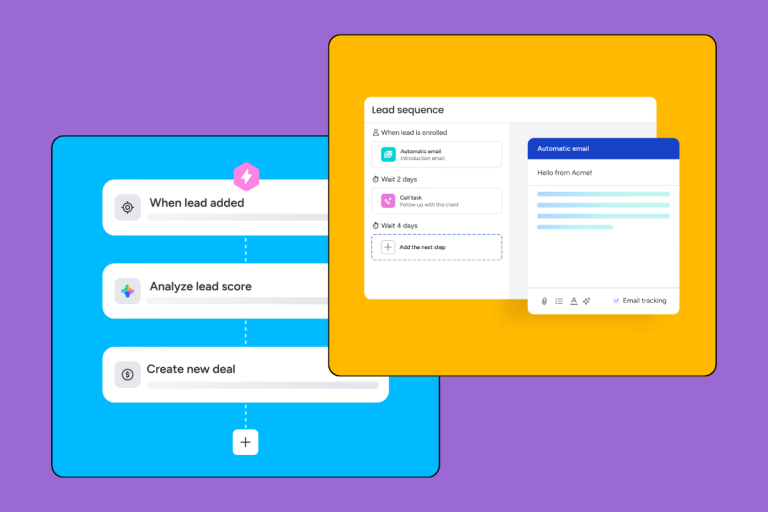
Monday CRM – the pick for teams that want visual account boards and don’t mind building their own structure. It’s the most flexible of the three for custom account workflows – you can spin up a board per account, build a QBR template column, automate reminders – but the learning curve is real and you’ll spend a week setting it up. From $12/user/month. Full review at Monday CRM review.
If you’re choosing between them: Pipedrive if you want minimum friction, HubSpot if you want to start free and scale, Monday if you want flexibility and don’t mind configuration. There’s no single winner; the right choice depends on whether you’re optimizing for time-to-launch, total cost, or workflow control. See the broader comparison in our best CRMs for sales teams ranking, and the underlying primer on what a CRM actually does if you’re new to the category.
Common account management mistakes (and how to avoid them)
A quick tour of the patterns we see most often in SMB account management programs that aren’t working:
- Treating every customer like a key account. This is the most expensive mistake. You burn out your AMs and under-serve the customers who actually move the revenue. Run the 80/20 sort and stick to it.
- Building the account plan once, never updating it. A plan from January isn’t useful in June. Re-write each plan at the start of every quarter. Ten minutes per account.
- Single-threaded relationships. Managing a customer through one person means one person leaving the customer can kill the account. Have a named relationship with at least two stakeholders per key account, and a recognized face with three for strategic accounts.
- Treating renewal like a transaction. The renewal conversation should start 90 days out and lead with outcomes, not price. Sending the contract three weeks before expiry and hoping is how you get blindsided.
- No upsell motion. AMs who don’t pitch expansion don’t grow the book. If your AMs are over 90% renewal and under 5% expansion, the playbook is broken – either the comp plan doesn’t reward expansion or the AMs haven’t been trained on how to pitch it.
- Confusing AM and CSM work. Customer success drives adoption and outcomes. Account management drives commercial relationship. If your AM is spending all day troubleshooting product issues, you’ve turned them into a support rep and the renewal will suffer.
Account management FAQ
What does an account manager actually do?
An account manager owns the commercial relationship with existing customers after the sales team closes the deal. They run check-ins, fix problems, identify upsell opportunities, negotiate renewals, and coordinate internal teams on behalf of the customer. The KPI they’re measured on is usually net revenue retention plus expansion revenue from their account book.
What are the 5 key account management processes?
Identify your key accounts (the 20% driving 80% of revenue), map the stakeholders and decision power in each account, build a one-page account plan, run quarterly business reviews, and measure renewal and expansion outcomes. The first step matters most – if you pick the wrong accounts to focus on, the other four don’t matter.
What skills do you need for account management?
Active listening, commercial instinct, written communication, stakeholder mapping, product fluency, and renewal negotiation. The first two are the hardest to train; the others can be developed with reps. If you’re hiring, weight listening and commercial instinct over everything else.
What is the 80/20 rule in account management?
The Pareto principle applied to a customer book: roughly 20% of your customers will generate about 80% of your revenue. The 80/20 rule in account management says you should concentrate your high-touch effort on that top 20%, run a lighter-touch playbook on the rest, and never accidentally invert the ratio by giving the small accounts most of your attention.
Account management vs sales: what’s the difference?
Sales acquires new customers; account management keeps and grows them. Sales is measured on closed-won new ARR. Account management is measured on net revenue retention and expansion revenue. The day-to-day work is different too – sales prospects, account management nurtures – and the personality types that do each well are usually different.
Is account management a high-paying job?
In US B2B SaaS, AM base salaries usually run between $70k and $130k, with OTE 1.4–1.6x base when you include renewal and expansion commission. Senior AMs and strategic AMs at enterprise software companies can clear $250k OTE. It’s a real career path, not a stepping-stone role.
Do you need a CRM for account management?
Effectively, yes. You can run a small portfolio (under 20 accounts) in a spreadsheet, but past that you’ll lose track of stakeholders, renewal dates, and account plans. The good news is that the same CRM you use for sales can usually run your account management workflow with two or three custom fields. Start with what you already have before buying a dedicated tool.
Last updated: 9 Jun 2026 · CRM Pickle Editorial · We review CRM software for SMBs. We participate in affiliate programs with several of the CRMs mentioned above, which means we may earn a commission if you sign up via our links. It doesn’t change which tools we recommend.