
B2B sales is the process of one company selling products or services to another company. The name is short for business-to-business, and it covers everything from a software vendor selling a CRM subscription to a coffee roaster supplying beans to a chain of cafes.
That’s the definition. The interesting part is how different B2B selling is from the kind of selling most of us know as customers, and whether you should care, either because you’re building a sales team or thinking about joining one. We’ll cover both, with real numbers where we can.
What does B2B mean?
B2B stands for business-to-business. It describes any transaction, relationship, or company where the customer is another business, not an individual consumer. A payroll software company is a B2B company. So is a wholesaler selling lumber to construction firms. The opposite model is B2C, business-to-consumer, where companies sell directly to people.
You’ll see the abbreviation everywhere in job postings, marketing copy, and company descriptions, usually doing the quiet work of telling you who the customer is.
A few sibling acronyms you’ll run into: B2C (business-to-consumer), B2G (business-to-government), and D2C (direct-to-consumer, manufacturers skipping the retailer), B2B2C (business-to-business-to-consumer, example: Amazon, AirBnB, Apple Store). The pattern is always the same. The letters before the 2 sell to the letters after it.
What is B2B sales? A plain-English definition
B2B sales means selling your product or service to other companies. A deal happens when someone at the buying company, usually several someones, decides your offer solves a business problem at a price they can justify.
That last part matters more than any textbook definition. Nobody buys accounting software because they want it. They buy it because invoices are late, the auditor is unhappy, or the founder is doing the books at midnight. B2B purchases are justified, budgeted, and signed off. Often by people who will never use the product.
What B2B sales means in practice
B2B sales proces is much different and it takes longer.
Here’s what that looks like day to day. A salesperson spends the morning researching 30 companies that fit their target profile, sends personalized emails to 15 of them, gets two replies, and books one demo. The demo happens three weeks later with a sales manager and an ops person on the call. The deal closes two months after that, for $7,200 a year, after the CFO asks twice why the team can’t just use spreadsheets.
Slow, deliberate, and relationship-heavy. If you’ve only experienced retail or e-commerce selling, the pace will surprise you.
The same pattern holds outside software. A rep at a packaging supplier might spend her week visiting three regional food brands, walking their production lines, and quoting custom box runs. Her deals close on price, reliability, and whether she picks up the phone when a shipment goes missing. No demo calls, same fundamentals: find companies with the problem, earn trust with the people who feel it, and make the business case to whoever signs.
Notice what’s missing from both examples: persuading anyone who didn’t already have the problem. Good B2B selling is mostly disqualification. You’re hunting for the companies where the pain is real and the timing is right, then making it easy for them to say yes.
B2B vs B2C sales: what’s the difference?
The core difference: B2B sells to organizations making considered decisions with someone else’s money, while B2C sells to individuals making personal decisions with their own. Everything else flows from that.
Difference between B2B and B2C with examples
| B2B sales | B2C sales | |
|---|---|---|
| Buyer | A company (several stakeholders) | An individual or household |
| Deal size | Hundreds to millions of dollars | Usually under a few hundred dollars |
| Sales cycle | Weeks to 12+ months | Minutes to days |
| Decision process | Committees, approvals, procurement | One person, often impulse |
| Relationship | Ongoing, renewals and upsells | Mostly transactional |
| Example | HubSpot selling marketing software to a 50-person firm | Nike selling you running shoes |
Gartner has put the typical B2B buying group at six to ten stakeholders, and our experience reviewing CRM workflows backs that up. Even a modest software purchase at a 30-person company tends to involve the end user, their manager, and whoever controls the budget. In B2C, the entire committee is you, standing in a store.
The difference shapes how each side sells, too. B2C companies pour money into advertising and make buying frictionless, because the whole decision might take ninety seconds. B2B companies hire salespeople, because a $50,000 decision involving seven people doesn’t happen at a checkout page. Somewhere in the middle sits the self-serve software trial, where a $30-per-month tool gets bought like a consumer product even though a business is paying. Below a certain price point, B2B buying starts to behave like B2C, and plenty of cheap SaaS is sold with no salesperson at all.
One more nuance worth keeping: the line blurs. A laptop maker sells to consumers and to corporate IT departments. Same product, completely different sales motion. If you’re choosing software for each motion, we’ve broken down how the needs differ in our guide to B2B vs B2C CRM.
B2B sales examples
Abstract definitions only get you so far. Here’s what B2B sales actually looks like across the most common categories.
SaaS and software sales
The example you’ll meet most often, and the one CRM Pickle lives in. A software company sells subscriptions to business tools: CRMs, payroll systems, project management apps, email platforms. A typical deal: a 20-person recruiting agency signs up for Pipedrive at roughly $59 per user per month on the Growth plan, which works out to about $14,000 a year. The sale took a free trial, two demo calls, and a pricing negotiation.
Deal sizes scale with the buyer. The same CRM vendor might close a 5-person startup at $1,800 a year through a self-serve trial, while its enterprise team spends nine months landing a 500-seat contract worth $400,000, complete with security questionnaires and a legal review of the data processing agreement. Same product. Wildly different sale.
Software dominates B2B sales conversations because the economics are unusual. The product costs almost nothing to deliver, so companies pour money into sales teams instead. That’s why tech sales jobs pay the way they do, and why so much of the advice you’ll read about B2B sales quietly assumes you’re selling SaaS.
Wholesale, manufacturing, and services
The older, larger, less glamorous side of B2B:
- A food distributor supplies restaurants with produce on weekly orders and net-30 payment terms
- A parts manufacturer sells brake components to a car maker on a multi-year contract
- An accounting firm sells a $3,000-per-month retainer to companies that outgrew their bookkeeper
- A marketing agency pitches and wins a six-month website redesign for $45,000
Each of these runs on a slightly different engine. The distributor’s sale is won once and then defended every week through reliability and pricing. The manufacturer’s deal probably started with a formal RFP and ended in a procurement negotiation that took longer than building the actual parts. The accounting firm and the agency sell expertise, which means the “product demo” is really a credentials pitch, references, case studies, and a proposal document somebody stayed up writing.
Different products, same fundamentals. Business buyer, considered decision, ongoing relationship. The accounting firm and the parts manufacturer have more in common with each other, sales-wise, than either has with a shoe store. And every one of them has the same operational problem: dozens of open conversations at once, each at a different stage, each with money attached.
The B2B sales process, step by step
Most B2B teams follow some version of the same sequence. Names vary by company; the logic doesn’t.
From prospecting to closing
- Prospecting. Build a list of companies that fit your ideal customer profile and find the right person to contact. This is research work: industry, company size, signs they have the problem you solve. A rep selling HR software might filter for companies between 50 and 200 employees that posted a “People Ops” job in the last quarter, a decent signal that HR processes are straining.
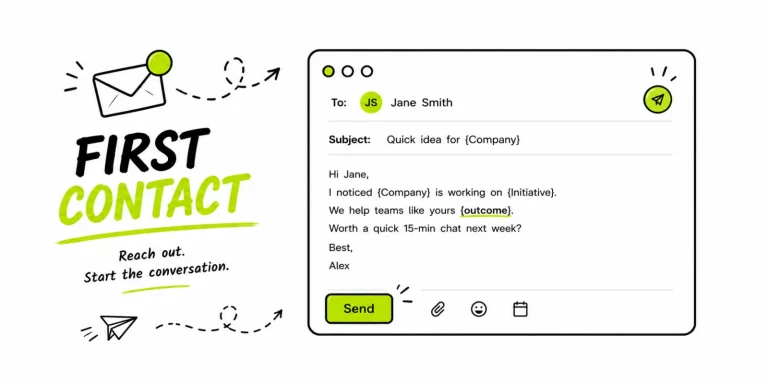
- Outreach and qualifying. Contact prospects by email, phone, or LinkedIn and figure out if they’re worth pursuing. Do they have the problem, the budget, and any intention of fixing it? Most won’t. That’s normal. The classic qualification shorthand is BANT: budget, authority, need, timeline. You don’t need all four on the first call, but a deal missing three of them is a hobby.
- Discovery. A first real conversation where you ask about their situation. Good reps listen far more than they pitch here, because everything later depends on what they learn. The questions that matter: what does this problem cost you today, what happens if you do nothing, and who else cares about fixing it?
- Demo or proposal. Show how your product solves their specific problem. Generic demos lose deals; the prospect should see their own workflow on the screen. If discovery revealed that late invoices are the pain, the demo opens with invoicing, whatever the standard script says.
- Negotiation. Pricing, contract terms, security reviews, procurement. The unglamorous stretch where deals go quiet for weeks. Patience and polite persistence win here, and so does knowing your walk-away number before the buyer asks for 30% off.
- Closing and handoff. Signatures, kickoff, and a handoff to whoever manages the relationship. In subscription businesses the work isn’t over: the renewal is the next sale, and a sloppy handoff now is a churned customer in eleven months.
Every step generates follow-ups, and dropped follow-ups are where revenue dies. That’s the actual reason sales teams obsess over sales pipeline management, tracking every deal by stage so nothing slips.
Where the B2B sales funnel fits in
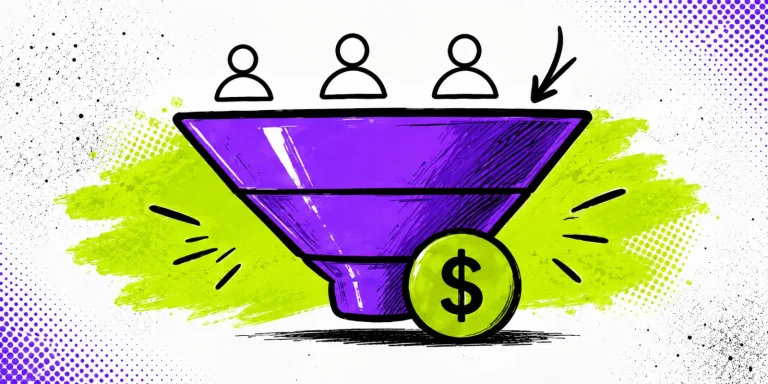
The funnel is the same process viewed from above. Lots of prospects enter at the top, fewer survive each stage, and a handful become customers. If 200 cold emails produce 20 conversations, 8 demos, and 3 deals, that’s your funnel, and those ratios tell you exactly where to improve. Teams that measure conversion between stages can fix the weak step. Teams that don’t just work harder and wonder why nothing changes.
You’ll also hear “pipeline” used almost interchangeably. The practical distinction: the funnel describes how prospects move in aggregate, while the pipeline is the named list of live deals, each with a value and a stage. The funnel is for diagnosing; the pipeline is for managing Tuesday morning. A team can have a beautiful funnel chart and a pipeline full of dead deals nobody has touched in a month, which is why we’d rather see a clean pipeline than a fancy dashboard.
Is B2B sales difficult? The honest answer
Yes. The vendors writing about this topic tend to skip that part.
The #1 result on Google for “b2b sales” right now is a Reddit thread of salespeople asking what the catch is. Worth pausing on that. Here’s what makes it hard:
Long cycles test your patience. A deal can take six months and die in week 23 because the champion changed jobs. You’ll have spent 20 hours on a deal that pays nothing.
You need several yeses. With six to ten people influencing a typical purchase, one skeptical CFO can sink a deal everyone else loved.
Rejection is the baseline. Cold outreach reply rates in the low single digits are common. You hear “no”, or nothing at all, dozens of times for every “yes”.
The quota resets. Close a great quarter and your reward is a fresh target in January. Some people find that energizing. Plenty burn out.
You control less than you think. Budgets freeze, champions leave, a competitor cuts prices, the company gets acquired mid-negotiation. A rep can run a flawless process and still miss quota in a bad quarter, which is a hard thing to explain to a sales manager staring at a dashboard.
So why does anyone do it? Because the compensation can be excellent, the skills transfer anywhere, and there’s a real satisfaction in solving an actual business problem. Good teams also don’t leave reps to suffer alone; that’s what sales enablement exists for, giving salespeople the content, training, and tools to win more often.
What separates the reps who last from the ones who wash out? From what we’ve seen, it’s rarely charisma. The durable ones treat selling as a process: they qualify hard so they waste less time on deals that were never real, they follow up when they said they would, and they keep notes detailed enough that a six-month-old conversation picks up where it left off. The struggling ones rely on memory and mood. Process beats talent in B2B sales, mostly because the cycles are too long for talent alone to carry.
Difficult and rewarding can both be true. Just don’t let a vendor’s blog post tell you it’s easy.
What tools do B2B sales teams use?
Given the process above, the tooling makes sense quickly.
The core tool is a CRM, the system where every contact, deal, and follow-up lives. If you’re new to the category, start with our plain-English guide to what a CRM is. With cycles this long and this many stakeholders, memory and spreadsheets collapse fast. We’ve tested the major options and ranked the best sales CRM picks by team size and budget, since a 5-person team and a 200-person team need very different things.
Around the CRM, most teams add a few supporting layers:
- A prospecting database for finding companies and contact details
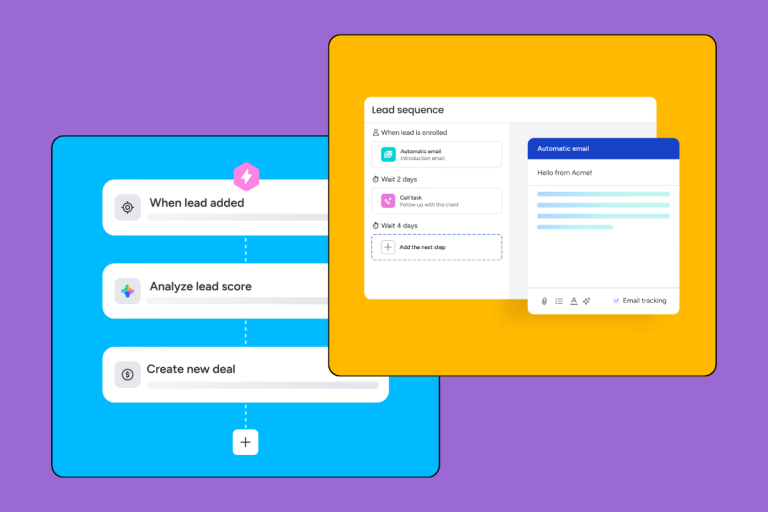
- An email sequencing tool that automates outreach follow-ups (the polite kind, ideally)
- Call software with recording, so deals don’t depend on a rep’s notes
- A scheduling link, because “what time works for you?” email chains kill momentum
Larger teams layer in lead scoring and nurturing to focus reps on the prospects most likely to buy, and the budgets climb from there into sales intelligence platforms and revenue analytics.
Our honest advice for small teams: start with a CRM and one outreach tool. We’ve watched 10-person companies buy six tools, integrate none of them, and end up running deals out of a shared inbox anyway. The full stack can wait until you have a repeatable process worth scaling. Pricing stings less when the tool is actually used.
FAQ: B2B sales
What does B2B sales mean on a job posting?
It means you’d be selling to companies instead of consumers. Expect outbound prospecting, demos or sales meetings, a quota, and a CRM you’ll live in. Titles like SDR or BDR (Sales/Business Development Representative) focus on booking meetings; Account Executives close the deals the SDRs book.
Is B2B sales a good career?
It can pay very well, especially in software, where on-target earnings for experienced account executives often reach six figures. The trade-off is quota pressure and a lot of rejection. People who like measurable goals and talking to strangers tend to thrive. People who need predictability usually don’t, and there’s no shame in that.
How do you get into B2B sales?
Most people start as an SDR, the entry-level role focused on booking meetings for closers. No degree required at most companies; hiring managers care more about coachability, resilience, and evidence you’ll do the work. The usual path runs SDR to Account Executive within one to two years, and the skills compound from there.
What is the 3-3-3 rule in sales?
The most common version: spend about three minutes researching a prospect, find three relevant facts, and use them to personalize your outreach. You’ll also hear other definitions, since it’s a folk heuristic rather than an official framework. The underlying point is solid either way: personalized outreach beats spray-and-pray.
Internal link URLs are best-guess paths – verify against the live site before publishing.