
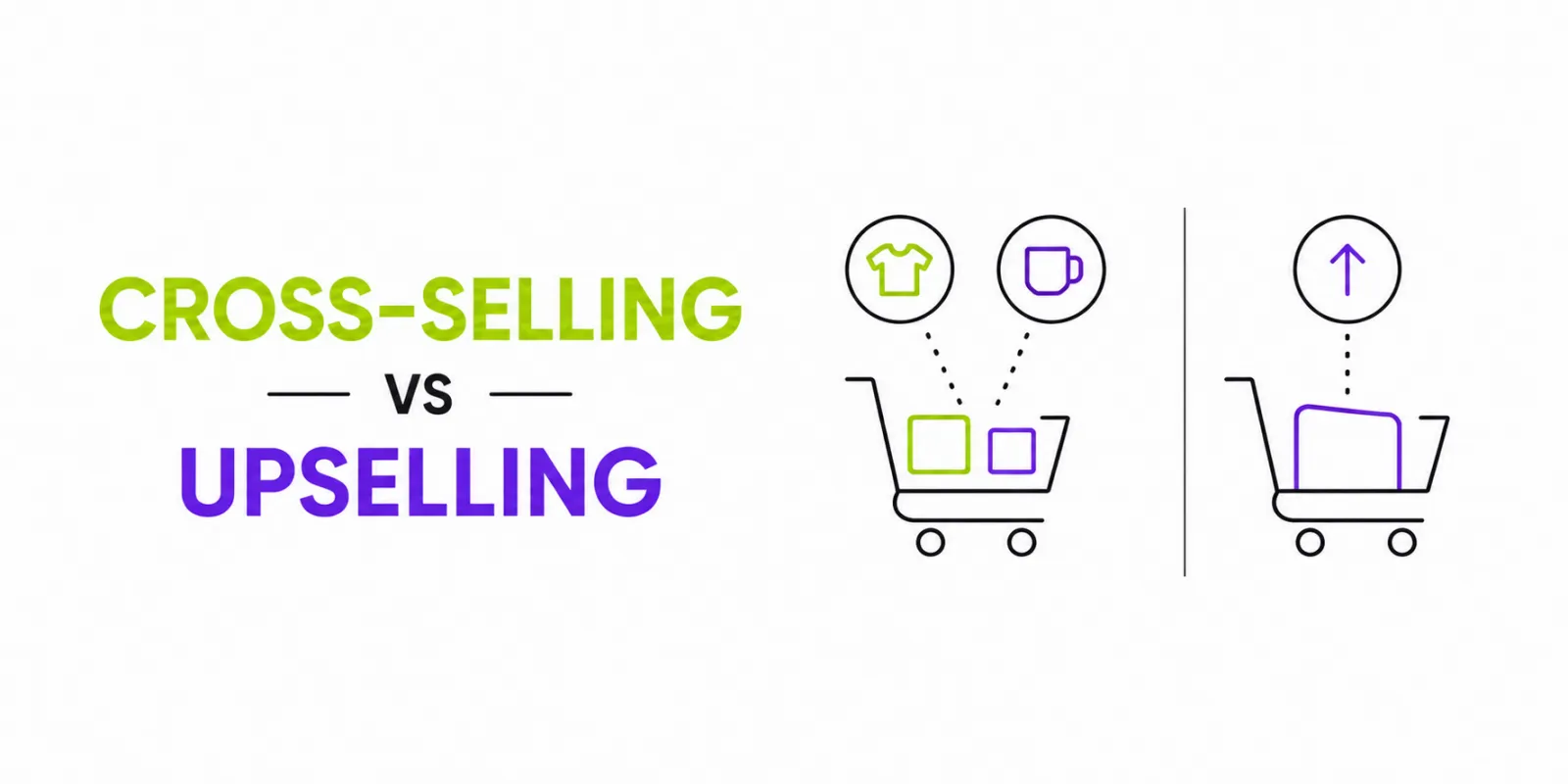
Cross-selling adds complementary products to a purchase. Upselling replaces the purchase with a more expensive version of itself. Both make money from customers you already have, which is the cheapest revenue you’ll ever earn.
The rest of this guide is the part the textbook definitions skip: how the two tactics differ in practice, what they look like in your industry, and the four-step workflow that makes them feel like service instead of pressure.
What Is Cross-Selling?
Cross-selling is a sales technique where you offer customers additional products or services that complement what they’re already buying. The original purchase stays untouched; you’re adding to the basket, not changing it. The classic example: a customer buys a laptop, and you offer the case, the mouse, and the extended warranty.
Done well, cross-selling helps the customer leave with a complete solution instead of a partial one. They were going to need that laptop case eventually – you saved them a second shopping trip. Done badly, it’s the checkout page that won’t stop suggesting things, and it actively costs you trust.
The mechanics matter less than the relevance. A complementary product is one the customer’s purchase makes more useful, not just anything else in your catalog.
Cross-Selling Examples
A few that show the pattern across contexts: a bike shop offers a helmet and lock with a new bike. An insurer suggests renters insurance to a customer who just bought an auto policy. A SaaS vendor offers an analytics add-on to a team that subscribed to its core product. Amazon’s “frequently bought together” widget does this at industrial scale – recommendations drive as much as 35% of what Amazon sells, by McKinsey’s estimate.
Notice what every example has in common: the add-on only makes sense because of the original purchase. That’s the test.
What Is Upselling?
Upselling is a sales technique where you persuade a customer to buy a more expensive version of the product they came for – a higher tier, a larger size, a newer model. The product category stays the same; the price point moves up. The coffee shop asking “large for 50 cents more?” is upselling in its purest form.
Upselling works when the upgrade’s extra value is obvious at a glance. It fails when the customer has to do math to figure out why the bigger option is worth it. If your sales team needs a paragraph to justify the upgrade, the tiers are the problem, not the pitch.
Upselling Examples
An airline offers extra-legroom seats at checkout. A CRM vendor nudges a team from the $15/user Essentials plan to the $39/user Professional plan for workflow automation. A hotel offers a room with a view for $40 more a night. A phone retailer points you from the 128 GB model to the 256 GB one, because you’ll fill 128 GB in a year and you both know it.
Same product, more money. That’s the whole move.
Cross-Selling vs Upselling: What’s the Difference?
Cross-selling adds different, complementary products to the purchase. Upselling increases the value of the same product. If the customer leaves with more items, you cross-sold. If they leave with a better version of one item, you upsold.
| Cross-selling | Upselling | |
|---|---|---|
| What changes | More items in the basket | Same item, higher price point |
| Classic example | Laptop + case + mouse | 128 GB phone → 256 GB phone |
| Best timing | At checkout or post-purchase | Before the purchase decision closes |
| Key metric | Attach rate, average order value | Average revenue per user/order |
| Main risk | Irrelevant offers erode trust | Customer feels squeezed and abandons |
The two tactics also pull on different data. Upselling needs to know where the customer sits in your pricing ladder. Cross-selling needs to know what they own and what usually goes with it. That second question is harder, which is why cross-selling fails more often – and why it depends so heavily on whether your CRM can actually answer it.
Why Both Matter: The Revenue Math
Selling to strangers is expensive. The much-cited Marketing Metrics benchmark puts the probability of selling to an existing customer at 60–70%, against 5–20% for a new prospect. Your existing customers already trust you, already know your product, and already have a payment method on file.
The follow-on numbers are just as direct. McKinsey research credits cross-selling with raising sales by about 20% and profits by about 30%. Invesp found that personalized cross-sell recommendations make up roughly 26% of ecommerce revenue while appearing in only 7% of visits. For a SaaS business, expansion revenue from existing accounts is the main lever behind healthy net revenue retention – the metric investors check before they check growth.
Run the math on your own numbers and the case makes itself. Say you have 400 customers paying an average of $120 a month. A cross-sell program that adds one $30 add-on to 10% of them is $1,200 in new monthly revenue – no ad spend, no sales cycle, no onboarding. Getting the same revenue from new logos means finding, convincing, and setting up ten strangers. Most SMBs we talk to spend 90% of their energy on the second path.
One honest caveat, because the vendors selling you cross-sell tooling won’t mention it: a 2012 Harvard Business Review study by Denish Shah and V. Kumar found that roughly one in five cross-buying customers is unprofitable – they return more, cancel more, and consume more support. Cross-selling to everyone is a losing strategy. Cross-selling to the right segment is the entire game, which brings us to the workflow.
How to Cross-Sell and Upsell Without Annoying Customers
The difference between helpful and pushy isn’t charm. It’s data and restraint, in four steps:
- Track what customers actually buy
- Segment before you pitch
- Time the offer
- Limit and personalize recommendations
Step 1: Track What Customers Actually Buy
Every workable cross-sell starts with one question: what do customers who bought X also buy? You can’t answer it from memory once you pass a few dozen customers. You need purchase history in one place – orders, plans, add-ons, returns – tied to each contact. This is baseline CRM hygiene, and it’s the step most SMBs skip before wondering why their offers miss.
Look for real patterns, not plausible ones. The pairing you’d guess and the pairing your data shows are different surprisingly often.
Step 2: Segment Before You Pitch
Not every customer should get the offer. Remember the HBR finding: some customers become less profitable the more they buy. Segment by purchase history and behavior, and deliberately exclude serial returners and heavy support consumers. A simple lead scoring model works for this on the expansion side too – score accounts for fit before your team spends time on them.
Step 3: Time the Offer
The same offer lands or dies on timing. Upsells belong before the purchase closes, while the customer is still deciding. Cross-sells belong at checkout or after, once the main decision is made. Pitching a cross-sell mid-decision is how you talk customers out of the original purchase.
Post-purchase is the most underused window: a follow-up three to five days after delivery, when the product is in use and the gap it doesn’t cover has become visible. Map these moments against your customer journey once and you’ll stop guessing.
Step 4: Limit and Personalize Recommendations
Cap it at three. Three relevant recommendations beat ten generic ones, and an offer wall longer than that reads as spam – the customer stops evaluating and starts scrolling. Personalize from purchase history – “you bought X, this goes with it” – and make declining frictionless. An ignored offer costs nothing. A nagging one costs the relationship.
Cross-Selling and Upselling Examples by Industry
The pattern is universal; the execution isn’t. Here’s what it looks like in the four industries people actually search for.
Banking and Insurance
Banks cross-sell a savings account with your checking account, a credit card with your mortgage. Insurers bundle auto with home and life. The fit is natural because financial products genuinely interlock – which is also why finance produced the cautionary tale. Wells Fargo’s 2016 scandal grew out of a cross-selling quota program so aggressive that staff opened accounts customers never asked for. The bank paid $3 billion to settle it and became the permanent case study in every compliance deck. Quota the fit, never the volume.
The upsell side of banking is quieter but real: premium account tiers, higher card categories, larger credit lines for customers whose deposits have grown. The trigger data already sits in the account history – the banks that do this well just read it.
Hotels and Hospitality
Hotels upsell the room (view, suite, late checkout) and cross-sell everything around the stay: airport transfer, spa, dinner reservations, parking. Hospitality’s advantage is timing density – booking, pre-arrival email, check-in, and mid-stay are four clean windows for offers, each suiting a different product.
The pre-arrival email is the one most independent hotels waste. A guest who booked three weeks ago has had time to think about the trip; a short note offering the airport transfer and a dinner reservation converts better there than the same offer crammed into the booking flow, where it competes with the room decision itself.
Ecommerce and Retail
Retail invented the modern playbook: “frequently bought together” widgets, bundles at a small discount, post-purchase email sequences. The risk in ecommerce is automation without curation. A recommendation engine left unsupervised will happily suggest a second laptop to someone who just bought one. Audit the widget’s output monthly – the embarrassing pairings are usually sitting there in plain sight, because nobody inside the company shops their own checkout.
SaaS and B2B Services
In SaaS, upselling is the tier upgrade and cross-selling is the add-on module, the extra seats, the adjacent product. This is where the line between sales tactic and account management blurs: expansion revenue is usually owned by whoever manages the relationship, and the best expansion conversations don’t sound like pitches at all. They sound like “you’re hitting the limits of your plan, here’s what that costs you.”
Usage data is the tell. An account at 90% of its seat limit, a team hammering an API that’s gated to the next tier, a feature request that an existing add-on already solves – each one is an expansion conversation waiting for someone to notice. The vendors with strong net revenue retention are the ones whose systems surface these signals automatically instead of relying on a rep’s memory.
How Your CRM Makes (or Breaks) Cross-Selling
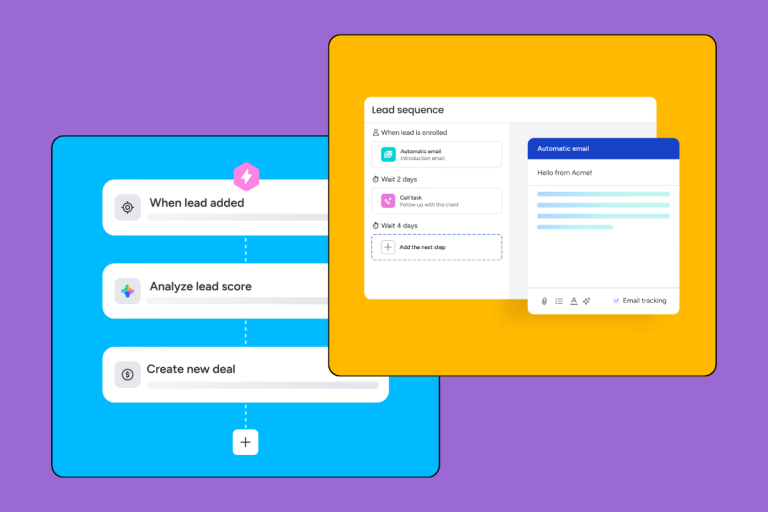
Every step in the playbook above is a CRM workflow wearing a different hat. Purchase tracking is your CRM’s data model. Segmentation is its filtering and tagging. Timing is its automation triggers. Recommendation limits are its discipline, enforced by what your team sees on the account screen.
Which means the honest version of “we’re bad at cross-selling” is usually “our CRM can’t tell us who owns what.” If your customer data lives in a spreadsheet, an inbox, and two disconnected tools, no amount of sales training fixes the workflow. We’ve reviewed enough CRMs to say this plainly: forget the “AI cross-sell module” on the pricing page. What decides the outcome is the unglamorous plumbing – purchase history, behavioral segments, and automations that fire on events.
Three concrete checks when you evaluate a tool. Can a rep see every product an account owns on one screen, without clicking into five tabs? Can you build a segment like “bought X, doesn’t own Y, no support ticket in 60 days” without exporting to a spreadsheet? And can a plan-limit event or a purchase trigger an automated follow-up with a delay you control? A CRM that passes all three will carry the whole playbook in this guide. One that fails the first check will fight you daily, whatever its price tier says.
If you’re picking a tool with expansion revenue in mind, start with what a CRM does if you’re new to the category, then our best sales CRM ranking – we score exactly this plumbing in every review.
Common Mistakes to Avoid
The same failures show up everywhere, so save yourself the tuition. Pitching everyone instead of segmenting comes first – it feels productive and quietly burns your list. Cross-selling mid-decision is second; you interrupted a yes to ask for a bigger yes, and now you have neither. Third is offering items with no real connection to the purchase, which trains customers to ignore all your offers, including the good ones.
Two more, subtler: rewarding your team on attach rate alone (see Wells Fargo, above), and treating a declined offer as a follow-up trigger. A no on a cross-sell is a no. Log it in the CRM, suppress the offer, and protect the relationship that’s actually paying you.
FAQ: Cross-Selling and Upselling
What is the 3-3-3 rule in sales?
A few versions of this circulate, and most are folklore. The one worth keeping for cross-selling: pitch no more than three add-ons, keep the pitch under three sentences, and drop it after three declines. Treat it as a discipline rule, because its whole job is stopping you from overselling.
What is a good cross-sell rate?
Benchmarks vary too much by industry for one honest number. Useful reference points: Invesp found personalized cross-sells drive about 26% of ecommerce revenue from 7% of visits, and McKinsey puts the upside near 20% on sales. If your attach rate is single-digit and flat quarter over quarter, you have room – start with timing, not volume.
Is cross-selling ethical?
Yes, when the add-on fits a real need and declining is frictionless. It goes wrong when incentives reward volume over fit – Wells Fargo’s fake-accounts scandal began life as a cross-selling program. Pay on retained revenue, not raw attach rate, and the ethics mostly take care of themselves.
What does upselling mean?
Upselling means moving a customer to a more expensive version of the same product they intended to buy: a higher tier, a bigger size, a longer commitment. The item stays the same; the spend goes up. Adding different complementary products is cross-selling.
The Bottom Line
Cross-selling adds to the basket; upselling upgrades it. Both convert trust you’ve already earned into revenue you don’t have to chase, and both fail the same way – irrelevant offers, bad timing, no segmentation.
If you do one thing this quarter, make it step 1: get purchase history into your CRM where your team can see it on every account. Every other step depends on it, and most SMBs we talk to haven’t done it. The math is on your side from there.