
Most retention articles tell you to “deliver great service.” Useful if you have a 200-person CX team. Less useful if you’re a founder running a 50-person company with one customer-success hire and a CRM that nobody has cleaned since 2024.
This guide skips the platitudes. We pull retention, segmentation, RFM, and buyer personas into one closed-loop system you can actually run – with a real worked example, a scoring matrix, a persona template, and a 90-day rollout you can hand to a single ops person on Monday morning.
We’ve set up this exact loop for SMB clients across SaaS, agencies, and e-commerce. The same three things go wrong every time. We’ll flag them as we go.
How Retention, Segmentation, RFM, and Personas Fit Together
Read nothing else, read this.
Customer retention is the goal. It’s the percentage of customers who keep buying or renewing across a defined window.
Customer segmentation is the lens – the act of slicing your base into groups that behave differently. RFM analysis (Recency, Frequency, Monetary) is the math that puts a number on each customer so segmentation is data-driven, not vibes-based. Buyer personas are the human face you put on each segment so your marketing, sales, and CS team can talk to a person instead of a row in a spreadsheet.
Run them in that order – retention is the goal, segmentation is the lens, RFM is the math, persona is the face – and the loop compounds. Run them as four separate projects and they cancel each other out.
What Is Customer Retention?
Customer retention is the ability of a business to keep existing customers buying, renewing, or actively using the product over time. It’s measured as the percentage of customers who stay across a fixed period, after stripping out customers acquired during that period. Higher retention means lower churn, higher customer lifetime value, and less reliance on paid acquisition to hit revenue targets.
If you sell subscriptions, retention is “did they renew.” If you sell repeat purchases, retention is “did they come back.” If you sell professional services, retention is “did they sign the second engagement.” Same word, different mechanics.
Customer Retention vs Customer Acquisition (and Why Retention Wins on ROI)
Acquisition is buying a new customer. Retention is not losing the ones you already paid for. Both matter. The reason every operator we respect leans on retention is the math:
- Acquiring a new customer costs 5–7× more than keeping one, depending on whose study you trust. Even the conservative end is brutal.
- A 5% lift in retention can drive a 25–95% lift in profit, per the original Bain/Reichheld work from 1990 that everyone still quotes (and most still misquote – it’s a range, not a single number, and it’s heavily weighted to industries with high acquisition costs).
- Retained customers spend more per transaction over time, refer more, and need less hand-holding. Their CAC is already paid; everything they buy after that is margin.
If your acquisition channel costs $500 to land a customer and your average gross profit per customer per year is $400, you don’t have an acquisition problem. You have a retention problem. You’re losing money on every new customer and only making it back if they stay for year two.
The 3 R’s and 8 C’s of Customer Retention (Frameworks, Demystified)
You’ll see two frameworks pop up in every retention deck. They’re useful as checklists, dangerous as strategy.
The 3 R’s: Retention, Related sales, Referrals. The reminder is that the same customer is worth three revenue streams – keeping them, selling them more, and getting them to introduce friends. If your retention dashboard only tracks the first one, you’re leaving the other two on the table.
The 8 C’s: Consistency, Convenience, Communication, Customer-centricity, Confidence (trust), Competence, Community, Care. Zendesk has built a small industry around this list. It’s fine as a service-quality audit. It is not a retention strategy. Telling a 12-person team to “be more consistent” is not an action. Telling them “the Champions segment hasn’t heard from us in 47 days, here’s the win-back sequence” is.
For our 50-person B2B SaaS reseller example (we’ll call them Bluepine, selling project management tools to mid-market): the 3 R’s matter because Bluepine’s expansion revenue from existing accounts is 3.4× cheaper to land than a new logo. The 8 C’s matter only after we’ve actually identified which accounts to apply them to.
Customer Retention Rate, Churn Rate, and the Metrics Every SMB Should Track
If you don’t measure retention, you can’t manage it. If you measure too many retention metrics, you’ll manage none of them. Track three: retention rate, churn rate, and customer lifetime value. Add net revenue retention if you sell subscriptions.
Customer Retention Rate Formula (Worked Example, No Spreadsheet Needed)
The customer retention rate formula:
CRR = ((Customers at end of period – New customers acquired during period) ÷ Customers at start of period) × 100
Bluepine starts Q1 with 312 active accounts. They land 47 new accounts in Q1. They finish Q1 with 326 active accounts. The math:
((326 − 47) ÷ 312) × 100 = (279 ÷ 312) × 100 = 89.4% retention rate
Read out loud: of the 312 customers Bluepine had on January 1, they kept 279 of them through March 31. They lost 33.
This is the only retention metric the founder needs to see on a dashboard. Everything else is a diagnostic.
Churn Rate, Repeat Purchase Rate, and CLV (and What They Don’t Tell You)
Churn rate is the inverse of retention rate – percentage of customers lost over a window. Bluepine’s Q1 churn is 10.6%. If you only track churn, you’ll get fixated on cancellations and miss the bigger story: why did those customers leave, and was the loss concentrated in one segment?
Repeat purchase rate matters for e-commerce and transactional businesses – percentage of customers who’ve bought twice or more. It’s the closest thing transactional brands have to a renewal metric.
Customer lifetime value (CLV) estimates total revenue from a customer across their lifetime. A simple version: average order value × purchase frequency × retention rate. CLV is the metric you compare to CAC. If CLV ÷ CAC is under 3:1, your unit economics are broken. Fix retention or kill the channel.
Net revenue retention (NRR) is the subscription-business version that counts expansion revenue. A 105% NRR means your existing customer base grows revenue even if you acquire no one new. Anything above 110% is a flywheel. Below 90% is a leaking bucket. (We covered the math in depth in our ARPU and NRR breakdown.)
What none of these metrics tell you: which customers are leaving and why. That’s what segmentation is for.
Benchmarks: What’s a “Good” Retention Rate for Your Industry?
There is no single “good” number. Industry benchmarks from Shopify and similar sources put it roughly:
- Media and professional services: 84%
- Automotive and transportation: 83%
- Finance: 78%
- Software (broad): 77%
- E-commerce (any time window): 30%
The e-commerce number always shocks people. It shouldn’t – customers buy once, they vanish, that’s the model unless you build subscription mechanics or loyalty programs into it. Benchmarks tell you what’s normal, not what’s good. The right comparison is you against you, quarter over quarter.
For Bluepine at 89.4%, the comparison isn’t “is that good for SaaS?” It’s “was Q4 better, and which accounts dragged Q1 down?” That question is unanswerable without segmentation.
What Is Customer Segmentation? (And Why Retention Fails Without It)
Customer segmentation is the practice of dividing your customer base into groups that share meaningful traits – demographic, geographic, behavioral, or psychographic – so you can market, sell, and serve each group differently. The point isn’t classification for its own sake. The point is to stop treating every customer the same when they aren’t.
A retention strategy without segmentation says: “send everyone the loyalty email.” A retention strategy with segmentation says: “send Champions an early-access offer, send At-Risk customers a win-back discount, suppress everyone in Hibernating to protect deliverability.” Same effort. Wildly different results.
Customer Segmentation vs Market Segmentation: The Difference That Matters
People mix these up. Quickly:
- Market segmentation is what you do before you have customers. You’re dividing the addressable market into chunks to pick which ones to chase. Output: positioning.
- Customer segmentation is what you do once you have customers. You’re dividing your actual base into chunks to retain and grow them. Output: lifecycle marketing.
Most SMBs we audit have a market segmentation deck from when they raised seed money. Almost none have a customer segmentation that’s been updated since. The deck doesn’t help retention. The live segmentation does.
The 4 (Really 6) Types of Customer Segmentation
Forbes will tell you there are four types. Most marketing textbooks say four. In practice, SMBs need six axes to do real work:
- Demographic – age, income, role, education. The basics.
- Geographic – country, region, timezone. Matters more for product/CS than marketers think.
- Behavioral – what the customer does in your product or store. The most predictive of retention. RFM is a flavour of behavioral.
- Psychographic – values, beliefs, lifestyle. Useful in B2C, soft in B2B.
- Needs-based – the job they hired your product to do. Helps with positioning and reducing churn from product/market mismatch.
- Technographic (B2B) – the tools they already use. Critical if your product integrates with anything. If they’re on HubSpot, you sell differently than if they’re on Salesforce.
For B2B SMBs, replace “demographic” with firmographic (company size, industry, revenue) and you’ve got the working set.
Customer Segmentation Examples for a 50-Person B2B Company
Back to Bluepine. They sell project management software to mid-market services firms. Their 326 customers, segmented for actual retention work:
- Firmographic: 187 are agencies, 94 are consultancies, 45 are in-house ops teams at non-software companies. Different sales motions, different renewal triggers.
- Behavioral (RFM-style): 41 customers haven’t logged in for 60+ days but are still paying. That’s the leading indicator of cancellation. We’ll get to them in the RFM section.
- Technographic: 134 use Slack as the daily comms tool. The integration we built last year is a retention asset for that segment – they should hear about it in renewal conversations.
- Needs-based: 78 customers came in for “client reporting” as their primary job-to-be-done. If our reporting feature ever has an outage, those 78 churn first.
That’s a useful segmentation. “We have 326 customers” is not.
RFM Analysis: The Behavioral Segmentation Technique That Pays for Itself
RFM is the segmentation technique that most SMBs underuse. It’s older than spreadsheets (the original concept is from 1960s direct mail), but it still outperforms most “AI-powered” segmentation tools because it’s transparent, reproducible, and you can do it by Friday with the data already in your CRM.
What Does RFM Stand For? (Recency, Frequency, Monetary – in Plain English)
RFM analysis is a behavioral segmentation technique that scores each customer on three axes: Recency (how recently they bought), Frequency (how often they buy), and Monetary value (how much they spend). Combine the three numbers and you get a single score that tells you who to keep, who to win back, and who to stop emailing.
- Recency (R): how recently the customer last bought, renewed, or engaged. A customer who bought 5 days ago is more likely to buy again than one who bought 5 months ago.
- Frequency (F): how often they buy. High frequency means engagement and loyalty. Low frequency with high monetary spend is the “whale” – buys rarely, buys big, demands special handling.
- Monetary (M): how much they spend in total. High M customers are revenue concentration risk and reward in the same row.
Three numbers per customer. That’s it. The complexity comes from how you score them and what you do with the segments.
How to Calculate an RFM Score in 5 Steps (with a Real Customer Set)
We’ll walk through a 10-customer slice of Bluepine. Real method, real numbers.
Step 1: Pull a clean transaction list. Export every customer with their last purchase date, total number of purchases, and total spend across a defined window (we use 24 months for most SMBs – long enough to see a pattern, short enough to be current).
Step 2: Rank by Recency. Sort by “days since last purchase,” ascending. Top 20% get R=5. Next 20% get R=4. Down to R=1 for the bottom 20%.
Step 3: Rank by Frequency. Sort by number of purchases, descending. Top 20% get F=5, down to F=1.
Step 4: Rank by Monetary. Sort by total spend, descending. Top 20% get M=5, down to M=1.
Step 5: Combine. Stitch the three digits into one score. 555 is your Champions. 111 is functionally dead.
A worked Bluepine slice (10 of 326 customers):
| Customer | Days since last | # purchases | Total spend | R | F | M | RFM | Segment |
|---|---|---|---|---|---|---|---|---|
| Holt & Co | 8 | 17 | $48,200 | 5 | 5 | 5 | 555 | Champion |
| Maple Studio | 14 | 12 | $31,400 | 5 | 4 | 4 | 544 | Loyal Customer |
| Northland Labs | 22 | 9 | $14,700 | 4 | 3 | 3 | 433 | Potential Loyalist |
| Verge Agency | 41 | 8 | $11,200 | 3 | 3 | 3 | 333 | Needs Attention |
| Brimstone Ltd | 6 | 1 | $2,400 | 5 | 1 | 1 | 511 | New Customer |
| Ortho Group | 89 | 6 | $18,800 | 2 | 3 | 3 | 233 | At Risk |
| Ridge Partners | 118 | 11 | $36,500 | 1 | 4 | 4 | 144 | Can’t Lose Them |
| Beacon Co | 156 | 4 | $7,900 | 1 | 2 | 2 | 122 | Hibernating |
| Tally App | 67 | 2 | $1,400 | 2 | 1 | 1 | 211 | About to Sleep |
| Mosaic Tech | 9 | 5 | $24,300 | 5 | 2 | 4 | 524 | Recent Big Spender |
Two takeaways jump out. Ridge Partners (144) is the most important row in the table – a historically high-value, high-frequency account that hasn’t bought in four months. That’s a CS call this week, not a marketing email. Beacon Co (122) is functionally gone; suppress them from the regular nurture and put them in a quarterly “we built X, want to see it” re-engagement track.
What Is a Good RFM Score? The 9 Segments You’ll Actually Use
The textbook scoring gives you 125 unique combinations (5×5×5). You don’t need 125 segments. You need 9. The names come from the CleverTap / Optimove convention used in most retention tooling:
- Champions (555, 554, 545) – buy often, recently, big. Protect at all costs. Loyalty programs, early access, named CS contact.
- Loyal Customers (X5X with high R) – buy regularly. Upsell candidates.
- Potential Loyalists (5XX, 4XX with growing F) – recent, increasing frequency. Onboarding upgrades, light upsell.
- New Customers (5X1, 5X2) – just landed. Onboarding sequence, first 90-day check-in.
- Recent Big Spender (5/4 in R, low F, high M) – made one large purchase. Could be a one-off; nurture toward repeat.
- Needs Attention (333) – middle of the road. Trigger-based content.
- At Risk (2XX with high F/M historically) – were great, now slipping. Personalized win-back.
- Can’t Lose Them (1XX with high F/M) – high historic value, gone quiet. Direct human outreach. This is where revenue gets saved.
- Hibernating / Lost (1XX with low F/M) – low engagement, low value. Suppress to protect deliverability. Don’t waste effort.
A “good” RFM score depends on the axis that matters for your business model. Subscription companies weight Recency. High-ticket consultancies weight Monetary. Community platforms weight Frequency. Decide the weight before you start scoring, or you’ll re-score every six weeks chasing a different optimum.
When RFM Doesn’t Work: SaaS, B2B, and Long Sales Cycles
Honest catch: RFM was built for direct-response and e-commerce. It assumes purchases are frequent and discrete. That breaks in three cases:
- Pure SaaS – customers don’t “buy” repeatedly, they renew once a year. Replace Frequency with login frequency or feature usage (the RFE variant – Recency, Frequency, Engagement).
- High-ticket B2B with long cycles – one purchase every 18 months. Score on Recency and Monetary, drop Frequency, layer the segmentation on top of account-based metrics.
- Marketplaces with asymmetric users – sellers behave differently than buyers. Score them separately.
For Bluepine (annual subscriptions plus expansion add-ons), we use Recency = days since last login, Frequency = number of expansion modules purchased, Monetary = annual contract value. Same idea, business-appropriate inputs.
Buyer Personas: Turning a Segment Into a Person Your Team Can Sell To
A segment is a row in a spreadsheet. A buyer persona is a person. The translation matters because nobody on a 50-person team can hold “RFM segment 433, technographic = Slack, firmographic = agency under 50 staff” in their head while writing an email. They can hold “Maya at a 22-person creative agency who joined two quarters ago and just bought our reporting add-on.” That’s the same customer, rendered in a way the team can actually use.
What Is a Buyer Persona? (And What Most People Get Wrong)
A buyer persona is a profile of a real customer segment, written like a person. It includes role and demographics, but it earns its keep with motivations, objections, buying triggers, and the questions that customer asks before they pay you. Three to five personas covers most SMBs. Twelve personas is a presentation, not a tool.
What most people get wrong: building personas from imagination instead of data. The persona that starts “Marketing Mary loves yoga and oat milk lattes” tells you nothing. The persona that starts “Maya runs ops at a 22-person agency, came to us via a Slack community recommendation, decides on tools in under two weeks, churns if onboarding takes more than 14 days” tells you what to build, what to write, and where to spend.
Build personas from a real CRM segment. Not from a workshop.
The 4 Types of B2B Buyer Personas: Decision-Maker, Influencer, End-User, Champion
For B2B work, model personas by their role in the buying group, not their job title:
- Decision-Maker – signs the contract. Usually a founder or department head at SMB scale. Wants ROI, low risk, easy approval upstream.
- Influencer – consulted before sign-off. The senior IC who’ll say “yes, this is the right tool” or kill it. Wants depth, integrations, technical credibility.
- End-User – uses the product daily. Cares about workflow speed, fewer clicks, fewer bugs. Their pain is your retention lever.
- Champion – your internal advocate. Often a hybrid of influencer and end-user. Promotes you inside their company, brings you to the next company they join. The most valuable relationship in your CRM and the rarest – protect it like the founder relationship it actually is.
For Bluepine, the Decision-Maker is usually the agency owner; the Champion is usually the head of project delivery who originally lobbied for the purchase. Different messages to each. Different content. Different renewal conversations.
Buyer Persona vs ICP: Stop Confusing the Two
This trips up half the SMB teams we work with.
- An ideal customer profile (ICP) describes the company that should buy from you. Firmographic: industry, size, geography, revenue, tech stack. “Mid-market creative agencies in North America, 10–50 staff, using Slack.”
- A buyer persona describes the person inside that company who actually evaluates and signs. Psychographic: motivations, behaviors, objections. “Maya, ops lead, 5 years in role, evaluates tools in under two weeks.”
ICP comes first. Persona comes second. You need both. A persona without an ICP gives you great messaging for the wrong companies. An ICP without a persona gives you the right companies and generic outreach that doesn’t convert. We covered ICP construction separately – it deserves its own pillar – but the rule of thumb is: ICP defines who you target, persona defines how you talk to them.
How to Build a Buyer Persona From a Real CRM Segment (Step-by-Step)
The six-step build:
- Start from a segment, not an imagination. Pick one RFM or firmographic segment that matters – ideally Champions or At Risk. Build the persona around what those customers actually look like in your CRM.
- Pull the demographics from data. Role, company size, tenure, region. CRM and LinkedIn give you 80% of this.
- Add the buying journey. When did they first hear about you? How long from first touch to purchase? What did they evaluate against? Sales call notes are gold here.
- Interview five customers. Five is the magic number – enough to spot patterns, few enough to actually do it. Ask: what triggered the search, what almost made them choose someone else, what would make them leave.
- Write the persona as a one-page profile. Photo (or illustration), name, one-sentence summary, demographics, motivations, objections, success metrics, anti-persona note (“not a fit if…”).
- Pressure-test it against the next 10 sales conversations. If reps can’t predict objections from the persona, the persona is wrong. Rewrite.
Update twice a year. Personas drift as your product, market, and pricing evolve.
3 Buyer Persona Examples (with Free Template)
Three real-shape examples from our Bluepine case:
- Maya, the Agency Ops Lead (Decision-Maker / Champion hybrid). Runs operations at a 22-person creative agency. Buys to fix project-visibility chaos. Triggered by missed client deadlines and Slack thread sprawl. Decides in under two weeks. Wants live reporting and Slack integration. Churns if onboarding feels like a second job. Best content: short setup videos, real agency case studies.
- Devon, the Mid-Market Director of Client Services (Influencer / Champion). 40-person consultancy. Doesn’t sign the contract – pushes the founder to. Cares about utilisation rates and capacity planning. Will leave a comparison page open in their browser for two weeks before reaching out. Best content: deep-feature breakdowns, comparison guides, ROI calculator.
- Priya, the In-House Ops Manager (End-User). Works at a 120-person SaaS company; her team uses Bluepine even though she didn’t pick it. Cares about workflow speed and integrations with the rest of her stack. Renewal champion if she’s happy, contract-killer if she isn’t. Best content: integration directory, “what’s new” digest, power-user webinars.
Three personas, three different content tracks, one CRM. The template we use across SMB clients lives in the kit below.
The Closed Loop: How to Run Retention, Segmentation, RFM and Personas as One System
Most teams run these as four separate projects with four separate owners. The result is four shelfware reports. Run them as one closed loop and they reinforce each other.
Retention rate flags the problem → segmentation locates where the problem lives → RFM scores who’s at risk inside that segment → persona tells you what to say to them → action moves the retention rate.
A change in any one of those steps changes the next. New persona insight? Update segmentation logic. RFM segments shifted? Re-check the personas. Retention rate dropped? Look at which segments lost ground. That’s the loop.
A 90-Day SMB Workflow (Week-by-Week)
The cheat sheet we hand to SMB clients:
- Weeks 1–2: Calculate baseline retention rate, churn rate, CLV. One number each. Don’t optimise yet.
- Weeks 3–4: Pull the customer list. Run a basic segmentation: firmographic for B2B, demographic + behavioral for B2C. Identify 3–5 segments that materially differ.
- Weeks 5–6: Run RFM on the full base. Tag every customer with a segment label (Champions, At Risk, Can’t Lose Them, etc.). Don’t act yet.
- Weeks 7–8: Build personas for your top 3 segments. Interview five real customers per persona. Pressure-test against your sales team.
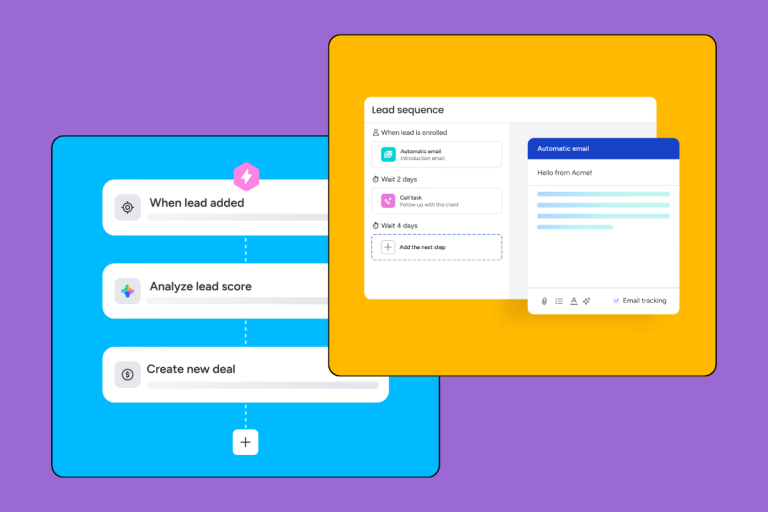
- Weeks 9–10: Map one retention action to each RFM segment. Champions get loyalty/early access. At Risk gets human outreach. Hibernating gets suppression.
- Weeks 11–12: Ship the actions through your CRM and marketing automation. Measure the retention rate at day 90 against the baseline.
90 days. One ops person. Real numbers at the end.
Customer Retention Strategies and Loyalty Programs That Actually Move the Needle
Most “customer retention strategies” articles list eight things (“personalise!” “be omnichannel!”). They aren’t wrong, they’re just useless without segmentation context. Here’s the same list, but mapped to which segment each one actually works on.
- Loyalty programs – move the needle on Champions and Loyal Customers. Pointless for At Risk (they don’t care about points if they’re already leaving).
- Win-back campaigns – built for At Risk and Can’t Lose Them. Personalised, time-limited, ideally with a human touch for the high-monetary segment.
- Referral programs – Champions only. Asking an At Risk customer for a referral is how you accelerate their churn.
- Onboarding optimisation – New Customers. The first 30 days set the trajectory; this is the highest-ROI lever any SMB has.
- Proactive customer success – Can’t Lose Them. Real CS calls, not automated emails.
- Product education / power-user content – Potential Loyalists. They’re already engaged; you’re trying to deepen usage.
- Suppression – Hibernating and Lost. The strategy is “stop emailing.” It feels backwards. It protects deliverability and your sender reputation.
What to Send Each RFM Segment (Champions, At Risk, Hibernating)
A short playbook by segment:
- Champions: quarterly named-rep check-in, early access to new features, referral asks, customer advisory board invites.
- Loyal Customers: upsell or cross-sell offers, review requests, case study participation.
- Potential Loyalists: product education content, light upsell, milestone celebrations.
- New Customers: onboarding sequence, week-2 check-in, day-60 success review.
- At Risk: personal email from a senior person, win-back discount only as a last resort, “what changed?” survey.
- Can’t Lose Them: human phone call from the founder or CS lead. Not a sequence. A call.
- Needs Attention: trigger-based re-engagement when behavior shifts.
- About to Sleep: one re-engagement try, then suppress.
- Hibernating / Lost: suppress. Quarterly “we built X” check only.
Notice nine segments, nine different actions. The same retention email to all of them is the most common mistake we see, and the most expensive.
Which CRMs Do Segmentation, RFM and Personas Well? (Tool Picks for SMBs)
You can do all of this in a spreadsheet. We’ve shipped it for clients with nothing but Google Sheets and a Mailchimp account. But if you want it native in your CRM, a few picks that actually deliver:
- HubSpot – strongest for SMBs that need persona-based marketing and lead-scoring native. Custom properties make ad-hoc RFM workable; the workflow builder handles the segment-triggered actions cleanly. Pricing stings at the Professional tier where the real automation lives.
- Klaviyo – the e-commerce retention pick. Native RFM-style “predictive analytics” segments. If you’re DTC, this is the first tool we recommend.
- ActiveCampaign – best for SMBs that want segmentation-driven email sequences with light CRM features. RFM-style scoring needs a workaround but is doable.
- Salesforce – the persona modelling and segment-builder are the most flexible we’ve used at the enterprise tier. The price tag and implementation overhead are both heavy. SMBs should default to one of the above unless they’ve outgrown them.
- Pipedrive – B2B pipeline-anchored personas, light on marketing automation. Pair with a marketing tool for the loop to close.
If you’re picking from scratch, our full Best CRM for Small Business breakdown ranks the field by use case.
Common Mistakes That Kill Retention and Segmentation Programs
The three failures we see at almost every SMB audit:
- Treating segmentation as a one-time project. Segments drift as your product and customer base evolve. If you haven’t re-segmented in 12 months, your segmentation is wrong.
- Building personas from a workshop instead of a CRM. “Marketing Mary loves yoga” is not a persona. Pull personas from real segments, validate with customer interviews, update twice a year.
- Running retention actions to the whole base. The single most expensive habit. The Champions deserve a different message than the Hibernating customers. Send the same email to both and you under-engage one and annoy the other.
A fourth, less common but more catastrophic: chasing a “good” retention benchmark instead of beating your own baseline. Benchmarks are noise. Your own trend line is signal.
Frequently Asked Questions
What is meant by customer retention?
Customer retention is the ability of a business to keep existing customers buying, renewing, or actively using the product over time. It’s measured as the percentage of customers who stay across a fixed period, after stripping out customers acquired during that period.
What are the 3 R’s of customer retention?
Retention, Related sales, and Referrals. The framework reminds teams that retention isn’t a single number – it’s a stack of three revenue streams from the same account.
What is the 80/20 rule in customer retention?
Roughly 80% of your revenue comes from 20% of your customers. The rule isn’t a law, but it shows up in almost every SMB customer base we audit. The implication: identify that 20% with RFM, build a buyer persona for them, and protect them harder than you protect anyone else.
What are the 4 types of customer segmentation?
Demographic, geographic, behavioral, and psychographic. Most SMBs should add technographic and needs-based for a usable picture. RFM is a specialised flavour of behavioral segmentation.
What does RFM stand for?
Recency, Frequency, Monetary value. Three numbers per customer.
What is a good RFM score?
On a 1–5 scale per component, 555 is the top score. But the right answer depends on which axis matters most for your business model.
What is a buyer persona?
A profile of a real customer segment, written like a person. Demographics plus motivations, objections, buying triggers, and the questions the customer asks before they pay you.
What is the difference between a buyer persona and an ICP?
ICP describes the company that should buy from you (firmographic). Buyer persona describes the person inside that company who actually evaluates and signs (psychographic). ICP first, persona second. You need both.
Want the SMB Retention & Segmentation Kit – retention-rate calculator, RFM scoring matrix, segmentation lens template, and the buyer persona one-pager all in one download? Grab it from the resources hub, then pick your CRM from the Best CRM for Small Business ranking and get the loop running by Friday.